

Although all are categorized as imo shochu, their aromas and flavors vary greatly depending on the distillery and brand.
One of the main reasons is the variety of sweet potato used as the raw ingredient.
Today, sweet potatoes for imo shochu can be broadly grouped into four types: white‑fleshed, red‑skinned, orange‑fleshed, and purple‑fleshed varieties. Each produces clearly different aroma characteristics even in the distillate immediately after distillation.
As the spirit settles after distillation, these characteristics gradually integrate, revealing the individuality of each sweet potato more clearly over time.
Understanding this relationship between ingredient and aroma helps deepen appreciation of imo shochu.
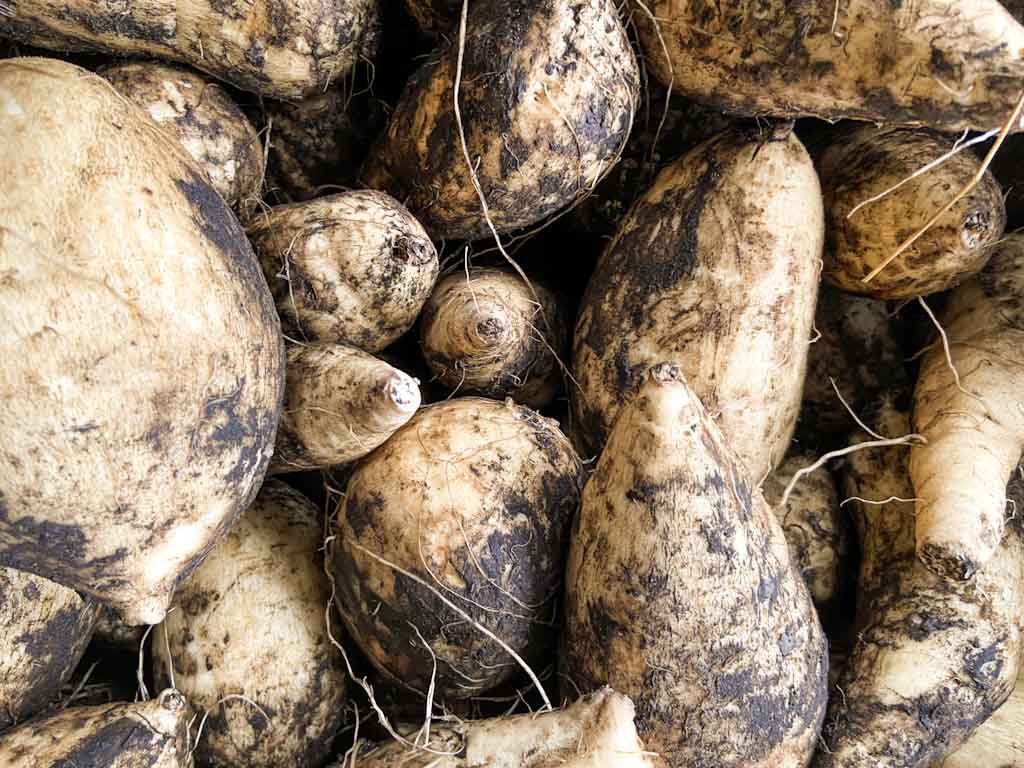
Ninety Percent of Imo Shochu Uses Kogane Sengan
Kogane Sengan
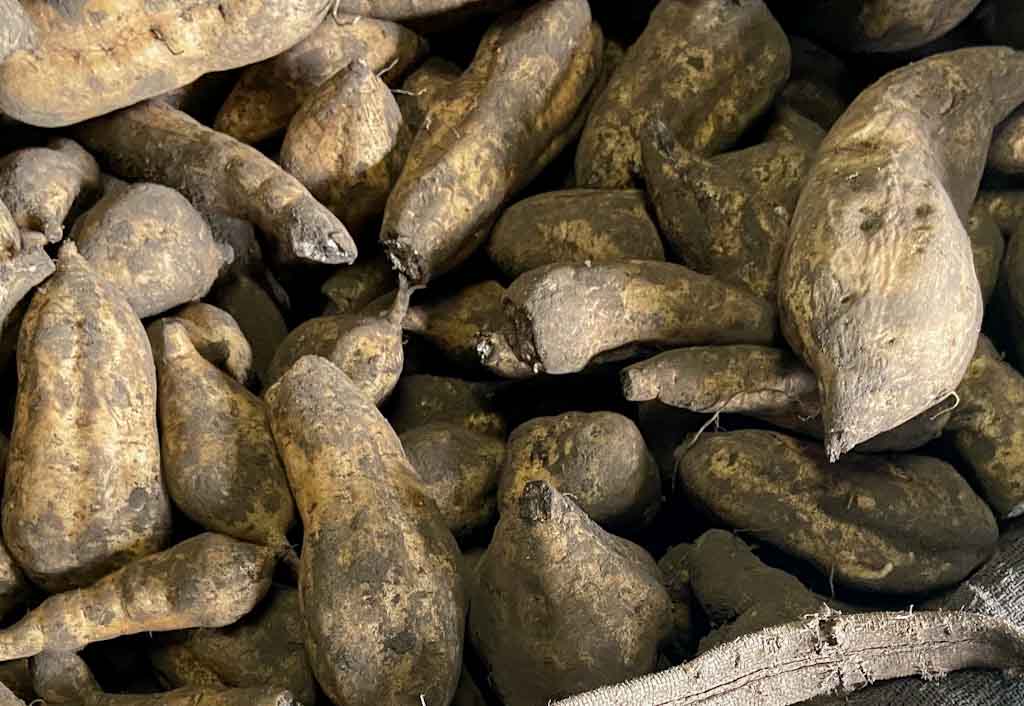
Approximately 90% of imo shochu is made from this variety, which has light yellow skin.
In the 1980s, research institutes and producers evaluated many cultivars to secure a stable raw material supply, and Kogane Sengan became the standard.
Originally developed in 1966 as a starch crop, it has high starch content and stable yield, making alcohol production efficient. Because many distilleries share the same ingredient, differences in distillation technique become easier to recognize.
Shochu Made with Kogane Sengan
- Tenshi no Yuwaku — Nishi Shuzo (Kagoshima) (aged shochu)
- Manzen — Manzen Shuzo (Kagoshima)
- Chiran Hotaru — Chiran Shuzo (Kagoshima)
- Murao — Murao Shuzo (Kagoshima)
- Satsuma Shiranami — Satsuma Shuzo (Kagoshima)
…and others.
White‑Fleshed Sweet Potatoes
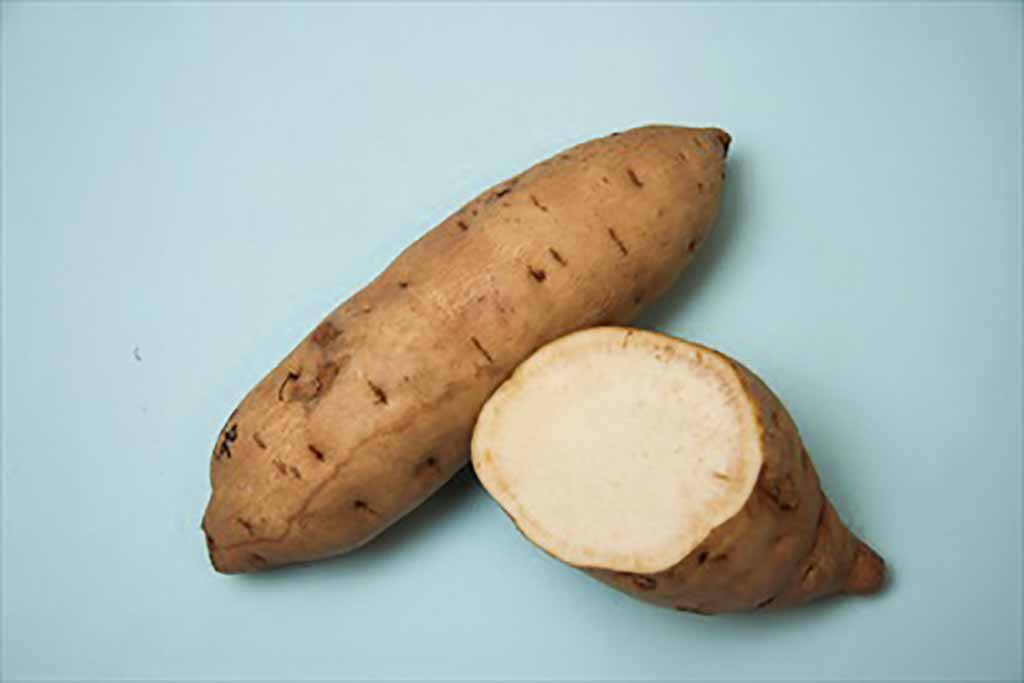
Image courtesy of the Kyushu Okinawa Agricultural Research Center
These sweet potatoes have pale skin and flesh.
Typical varieties include Joy White, Daichi no Yume, and Satsuma Masari.
Joy White was developed specifically for shochu in 1994 to broaden flavor diversity.
They often produce aromas reminiscent of gentle citrus, light floral notes, fresh greenery, and green fruit nuances.
These characters are associated with higher levels of linalool, a compound known for floral aromas.
Imo Shochu Made with White Sweet Potatoes
- Pure Imo (3-Year Aged) — Kokubu Shuzo (Satsuma Masari)
- Chozomisei Kyuyo — Tanegashima Shuzo (Shiro Sengan)
- Tsurumi — Oishi Shuzo (Shiroyutaka)
- Riha Joy White — Yoshinaga Shuzo (Joy White)
- Natsu no Mannen — Watanabe Shuzojo (Daichi no Yume)
…and others.
Red‑Skinned Sweet Potatoes
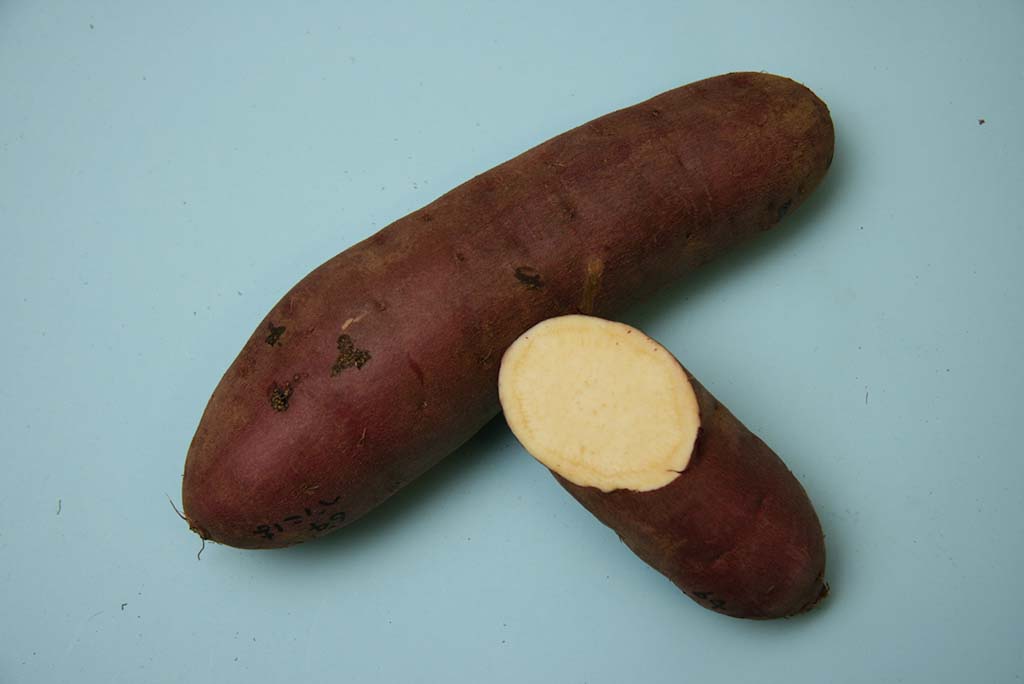
Image courtesy of the Kyushu Okinawa Agricultural Research Center
Common table varieties such as Beniharuka, Beni Azuma, and Silk Sweet belong to this category.
They tend to create aromas suggesting apple‑ or pear‑like sweetness, baked sweet potato richness, honeyed dried sweet potato, and roasted sweetness.
Because of their approachable character, they have become increasingly popular in recent years.
Imo Shochu Made with Red Sweet Potatoes
- Shoro — Shoro Shuzo (Miyazaki Beni)
- Ikenotsuyu Beni Haruka — Amakusa Shuzo (Beniharuka)
- Toji Junpei — Kodama Jozo (Miyazaki Beni)
- Jikuya Silk Sweet — Jikuya Shuzo (Silk Sweet)
- Beni Satsuma — Komaki Jozo (Beni Satsuma)
…and others.
Vivid Colors Even During Fermentation: Orange and Purple Sweet Potatoes
Orange‑Fleshed Sweet Potatoes
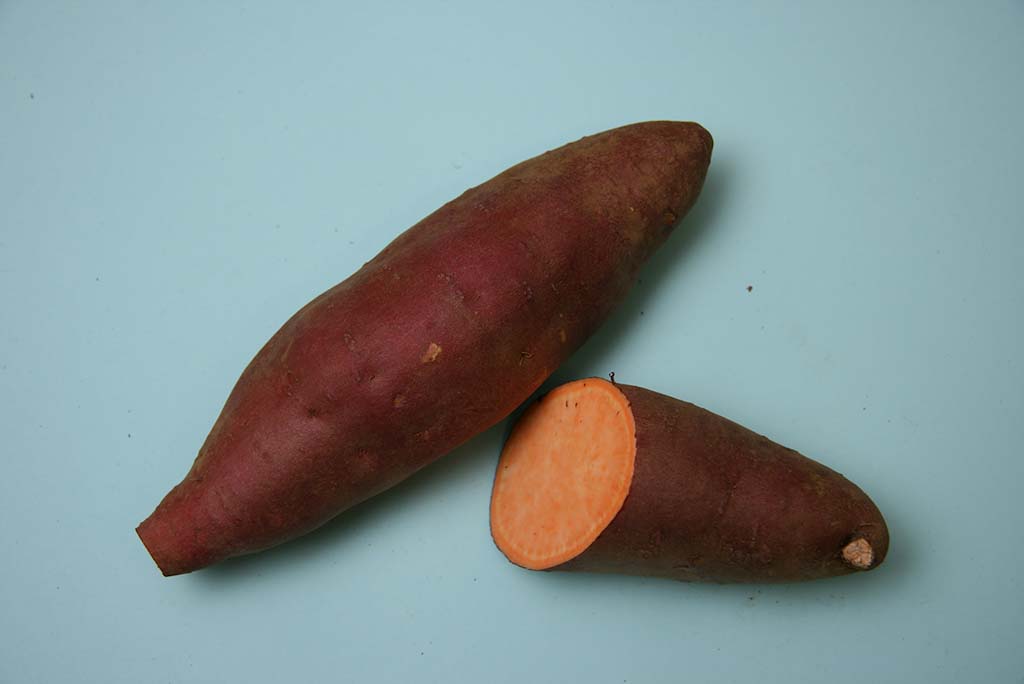
Image courtesy of the Kyushu Okinawa Agricultural Research Center
Varieties such as Ayakomachi, Hamakomachi, and Tamaakane have bright orange flesh.
During fermentation, the moromi becomes vividly orange.
They produce distinctive aromas such as Earl Grey‑like notes, rose‑like florals, and tropical fruit nuances including mango and apricot, along with hints of carrot and citrus peel.
These aromas are largely derived from β‑ionone and other compounds characteristic of orange‑fleshed varieties.
This style is especially recommended for drinkers who find traditional imo shochu too earthy.
Imo Shochu Made with Orange Sweet Potatoes
- Isakomachi — Okuchi Shuzo (Hama Komachi)
- Senbonzakura (Aged Hama Komachi) — Yanagita Shuzo (Hama Komachi)
- Akane Kirishima — Kirishima Shuzo (Tama Akane)
- Ouka Tama Akane — Kuroki Honten (Tama Akane)
…and others.
Purple‑Fleshed Sweet Potatoes
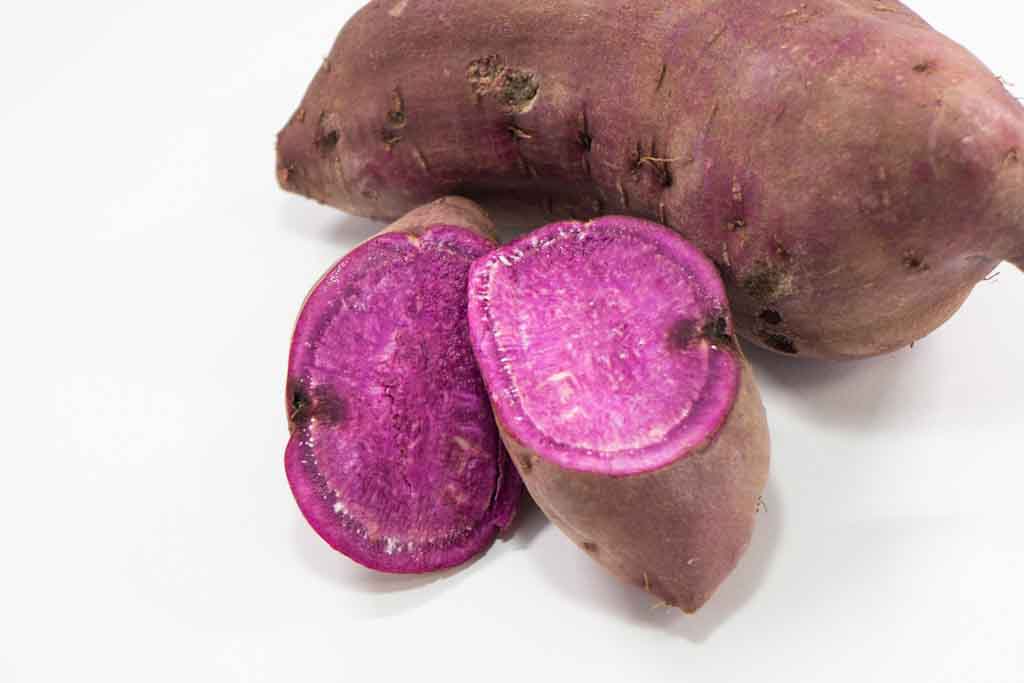
Varieties such as Ayamurasaki and Murasaki Matsuri contain high levels of anthocyanins and produce a wine‑red moromi during fermentation.
They can show lactic and wine‑like nuances, sometimes accompanied by tart plum‑like acidity, creating a distinctive aromatic profile.
Imo Shochu Made with Purple Sweet Potatoes
- Akasaru — Komasa Jozo (Purple Sweet Road)
- Kujira no Bottle Ayamurasaki (Black Koji) — Okai Shuzo (Ayamurasaki)
- Murasaki — Tanegashima Shuzo (Tanegashima Murasaki)
- Honkaku Shochu Masaki — Chiran Jozo (Purple Sweet Road)
…and others.
A New Approach: Conditioned Sweet Potatoes
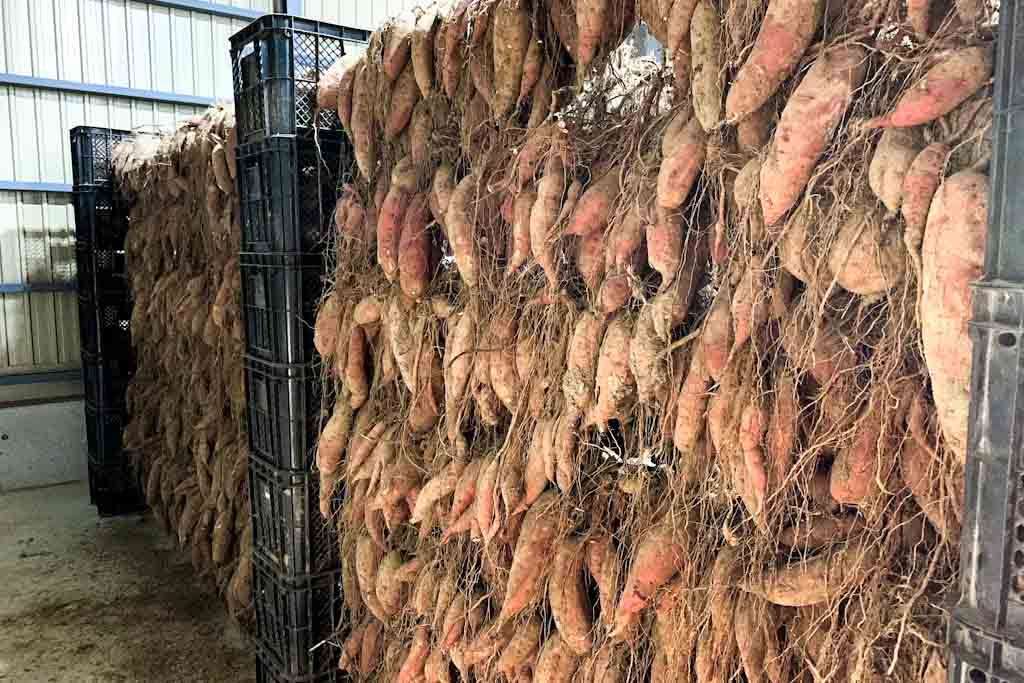
Image courtesy of Yachiyoden Shuzo Co., Ltd.
Recently, attention has grown around the use of conditioned sweet potatoes.
Freshly harvested sweet potatoes are rested before fermentation to enhance sweetness and aroma.
This process can produce notes resembling lychee, orange, apricot, banana, and honey due to changes in aromatic components.
This approach is still developing, and each distillery continues experimenting to refine its methods.
Imo Shochu Made with Aged Sweet Potatoes
- Tsurushi Yachiyoden — Kagoshima (Beniharuka)
- DAIYAME — Hamada Shuzo (Beniharuka)
- Flamingo Orange — Kokubu Shuzo (Satsuma Masari)
…and others.