

Being sustainable has now become an essential perspective in every aspect of society. It is no longer unusual for companies to engage in environmental protection as part of their CSR efforts or to incorporate the SDGs into their management policies. Distilleries around the world are no exception to this trend. From Diageo’s announcement of a new carbon-neutral Bulleit bourbon distillery in Kentucky to Glenmorangie’s initiatives to protect nearby coastlines, environmentally conscious efforts are now widespread across the industry.
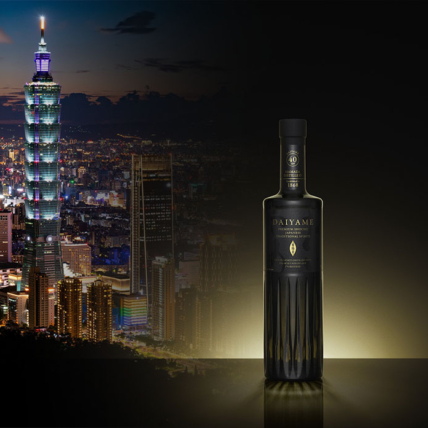
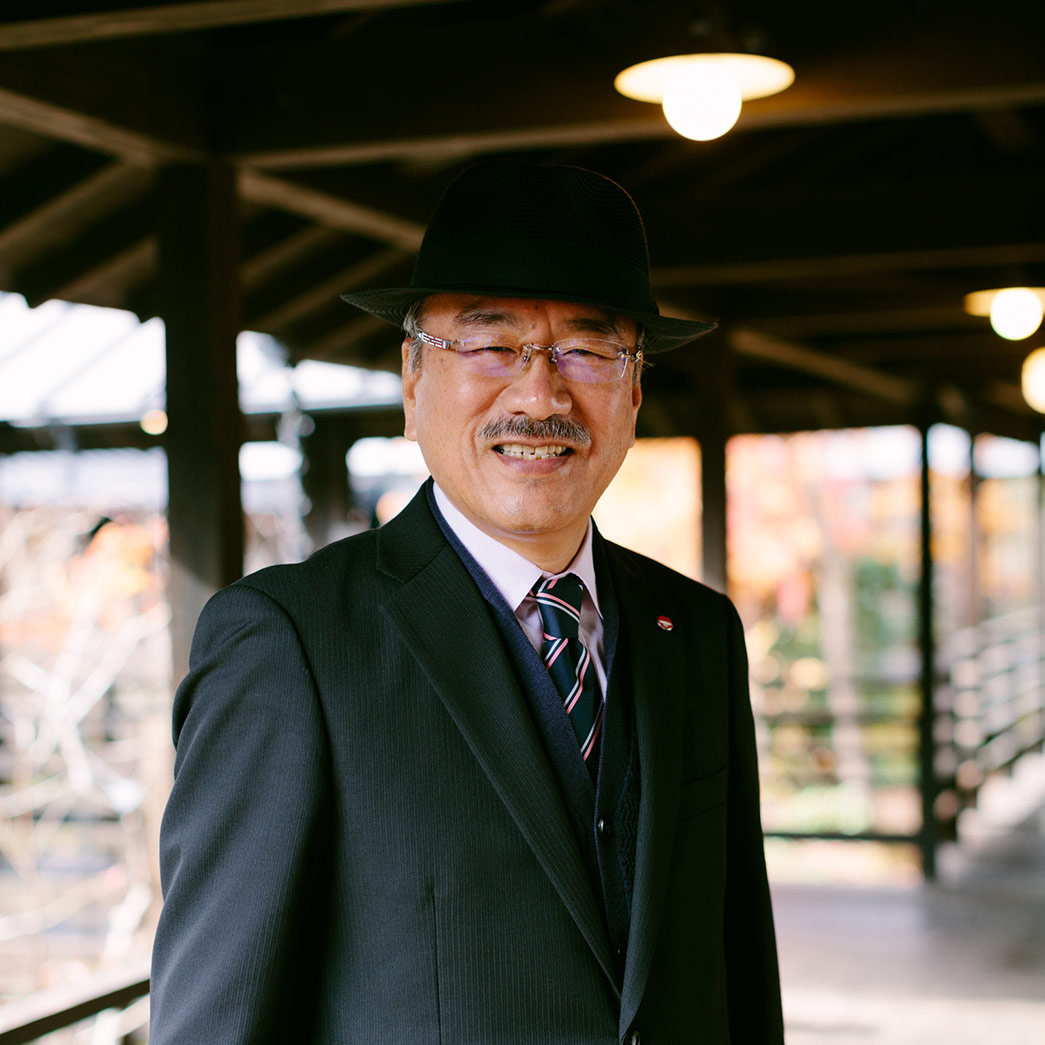
Hamada Shuzo, based in Kagoshima Prefecture and known for its authentic shochu “DAIYAME,” made from Kōjuku-imo sweet potatoes and characterized by its lychee-like aroma, is one such example. The company operates three distilleries in Ichikikushikino City in the western part of the prefecture—Denbei-gura, Denzoin-gura, and Satsuma Kinzan-gura—each embodying the philosophies of “tradition,” “innovation,” and “heritage” in shochu production. At Satsuma Kinzan-gura, a unique aging facility built within the tunnels of a former gold mine with over 350 years of history, we spoke with President Yuichiro Hamada.
A Responsibility to Carry On the Culture of Our Founding Place
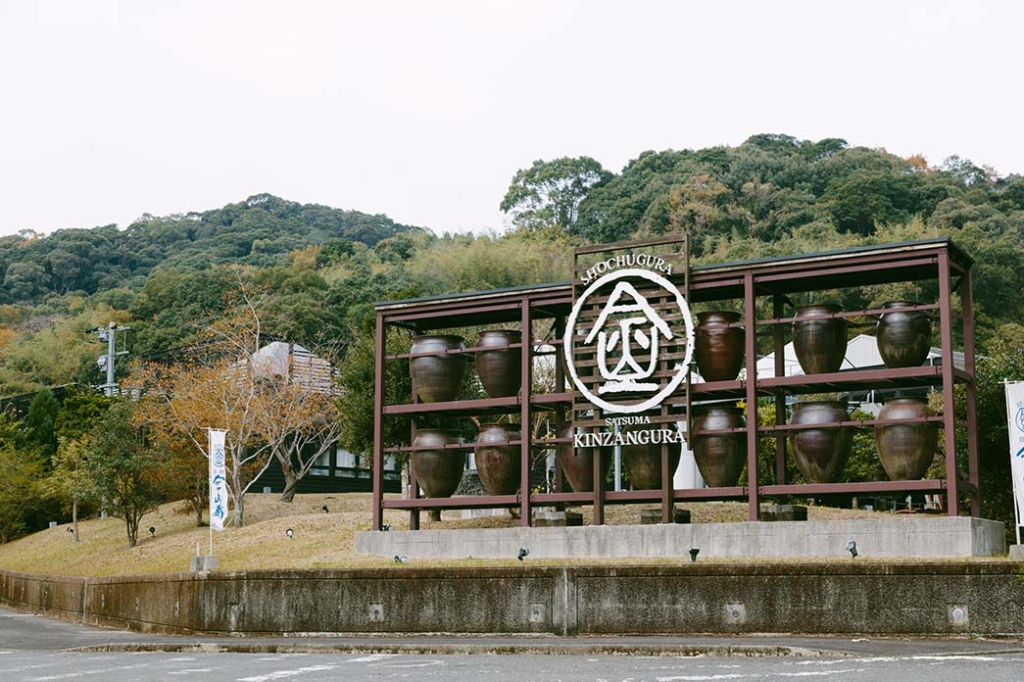
The entrance to Satsuma Kinzan Distillery, located in the mountains just inland from the coast of Ichikikushikino City.
—This Satsuma Kinzan Distillery, located on the western coast of Kagoshima in Ichikikushikino City, was originally part of a gold mine operated by the Satsuma domain, correct? I was impressed by how you convey the memory of this place—through the exhibition space on the history of the Satsuma domain and its gold mines, as well as the traditional shochu-making methods introduced inside the tunnels.
“Originally, the Kushikino Gold Mine was an important base that supported the finances of the Satsuma domain. Toward the end of the Meiji era, it came under the umbrella of Mitsui Mining and continued operating as the Mitsui Kushikino Mine until 1994.
From 1988 to 2003, it was open as an amusement facility called ‘Gold Park Kushikino,’ where visitors could explore the tunnels and mining sites. So I believe some locals may still remember it.
When discussions began about closing the park, a major question arose—whether it was truly acceptable to simply let such a historically significant site for the community disappear.”
“This city of Ichikikushikino is also the birthplace of our company, Hamada Shuzo. Even before this project, whenever we had guests, I would take them to ‘Gold Park’ and talk about the Satsuma domain and the Meiji Restoration.
That’s why I thought: by combining this gold mine with shochu—something deeply rooted in history and culture—we could share both the appeal and new possibilities of honkaku shochu with our visitors. And so we decided to take on this site and carry it forward as ‘Satsuma Kinzan Distillery.’
Of course, we were complete amateurs when it came to both managing a former mine and running a theme park, so it wasn’t easy at all (laughs). At one point, we even operated a bath facility called ‘Toji no Yu.’ It used hot water generated during distillation, and we even had baths infused with shochu lees rich in koji and yeast.
It was an incredibly luxurious experience and quite popular with visitors—but it was far from profitable! We didn’t really know how to promote it properly, and in hindsight, we underestimated things.
Today, the site serves as a place where visitors can experience the history of the gold mine and the traditions of shochu-making, though we’re still working hard to refine it.”

Satsuma Kinzan Distillery, where shochu is aged in the tunnels of a former gold mine that once supported the finances of the Satsuma domain.
—Being incorporated into your management philosophy and continuing in a financially sustainable way is also an important aspect of SDGs. Even so, the current form is truly fascinating. Aging honkaku shochu inside gold mine tunnels is something that could only happen through this unique encounter between a mine and a distillery.
“Exactly. The tunnels maintain a constant temperature of around 19°C throughout the year and are shielded from direct sunlight. This solemn and almost mystical environment, shaped by history, is truly one of a kind.
Of course, it was quite a challenge to carry those large earthenware jars—some as tall as a person—deep into the tunnels (laughs).”
—I can sense a strong attachment to the local community behind the creation of Satsuma Kinzan Distillery.
“I am the fifth-generation president of this company. We have survived thanks to the support of the local community, and that feeling is incredibly strong. That’s why we actively participate in local events as well.
I believe honkaku shochu should not be seen merely as ‘delicious alcohol,’ but rather as a cultural asset that should be communicated and preserved. It is both a local industry and a traditional one.
For tradition to endure, it must be passed on properly—but at the same time, innovation is necessary to prevent it from becoming obsolete. We are always conscious of creating a positive spiral of tradition, innovation, and succession, especially in relation to our local community.”
Preserving the Natural Environment Is Fundamental to Shochu Production

On the left is the “Message Bottle: Fortune Comes with Maturation,” which visitors can create. It is stored within the Kinzan Distillery until a designated date, after which it is delivered.
—At your Denzoin Distillery, you were also the first distillery in the prefecture to obtain FSSC 22000 certification, one of the highest international standards for food safety management systems. In addition, you have implemented a range of initiatives to ensure food safety and reduce environmental impact—such as generating biogas through methane fermentation of shochu lees to use as boiler fuel, and introducing an energy-efficient steam system that has reduced steam usage by 40% in the raw material steaming process.
“Fundamentally, the production and sale of honkaku shochu is a form of agricultural processing. Agriculture itself exists within a natural cycle. That is why we strongly believe that maintaining the natural environment is at the very core of sustaining our business.
Obtaining certifications such as ISO and FSSC 22000 also serves as a form of credibility when distributing our products globally. Whether we obtain them or not does not change what we must do, but having them allows us to stand at the starting line for global distribution.
In 2002, ocean dumping of shochu lees was banned under the London Convention. In response, together with other companies in the industry, we established the Nishi-Satsuma Clean Sunset Cooperative to promote a recycling-oriented society.
Today, it operates one of the largest facilities in Japan for methane fermentation and feed production using shochu lees. For example, methane fermentation alone converts approximately 70,000 tons of shochu lees annually into energy, which is then used as boiler fuel.
As technology continues to evolve, we keep a close eye on the latest developments around the world and work to reduce environmental impact throughout the entire production process. This is, of course, beneficial for our company—but also for the local community, and ultimately for the entire honkaku shochu industry.
Everything is connected in that way.”
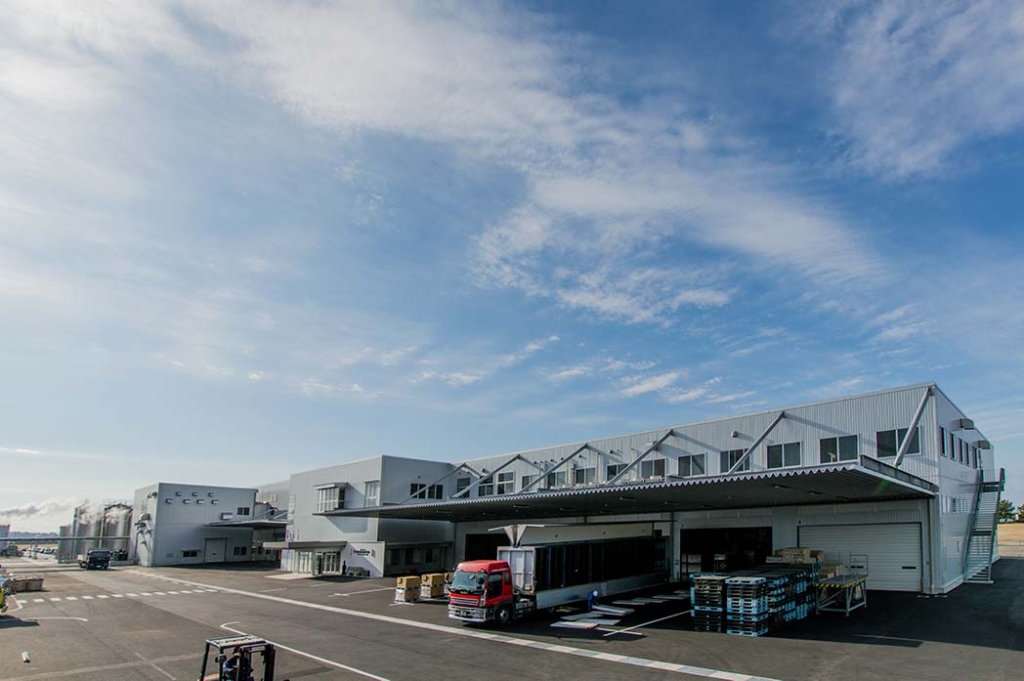
Denzoin Distillery, where the latest equipment is introduced at every stage—from fermentation and distillation to bottling and shipping.
Photo courtesy of Hamada Shuzo.
—Your product “DAIYAME,” released in 2018, was truly groundbreaking. Made using “Kōjuku-imo” (aroma-enhanced sweet potatoes) developed through your proprietary aging technique, it offers a sweet, lychee-like aroma. As a result, it has been widely embraced even by those who were previously hesitant about imo shochu, and has won numerous awards both in Japan and overseas. At the same time, however, this “lychee aroma” has sparked mixed reactions. In the past, within the shochu industry, such aromas were sometimes associated with less-than-fresh sweet potatoes. In that sense, it could be seen as a product that carried significant risk. As a leading company in Kagoshima’s honkaku shochu industry, how did you perceive that risk?
“Taking risks is, in itself, about trying something new. What we value most is the pursuit of new possibilities in shochu that customers find truly enjoyable. Innovation is essential for tradition to endure.
Many distilleries have continued to take on ‘new challenges’ and ‘adventures’ in this sense, and I believe the 500-year history of shochu culture is a repetition of exactly that.
Going forward, shochu as a cultural category must compete on the global stage as one team. And for a team to function, each distillery must have its own role. If everyone were a pitcher, or everyone a striker, it wouldn’t be a team (laughs).
These roles are not determined by the size of the distillery. That may have been the case in the past, but today is an era of individuality. Each distillery needs to define its own position—staying true to itself while drawing on the unique characteristics of its people and its land.”
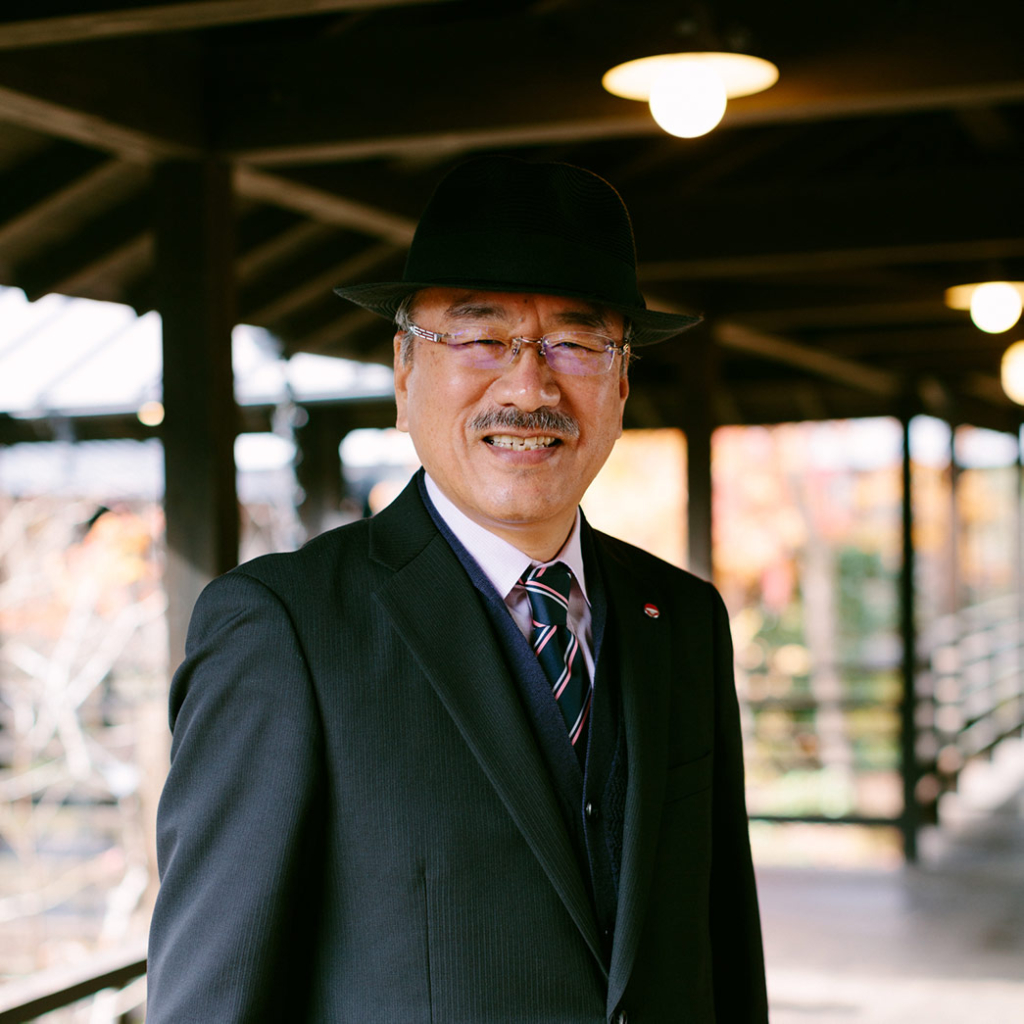
Yuichiro Hamada
President of the Hamada Shuzo Group; Chairman of the Kagoshima Prefecture Sake Brewers Association.
Born in 1953 in Ichikikushikino City, Kagoshima Prefecture, he joined Hamada Shuzo Co., Ltd. in 1975 and was appointed President in 1991. He has also served as Honorary Chairman of the Ichikikushikino Chamber of Commerce and Industry, Auditor of the Japan Sake and Shochu Makers Association, and former board member of the Seiwajuku organization. Since 2017, he has been Chairman of the Kagoshima Prefecture Sake Brewers Association.