

“I want to see the day when shochu stands alongside whisky, gin, and vodka in every bar in the world.”
When Christopher Pellegrini says this, it doesn’t sound like a distant dream. It feels inevitable.
Born in the United States and based in Tokyo since 2002, Pellegrini had never encountered authentic honkaku shochu or awamori before coming to Japan. What began as curiosity soon turned into a calling. Over the years, he has visited more than 150 distilleries across Japan, immersing himself in the craft, culture, and people behind these traditional spirits.
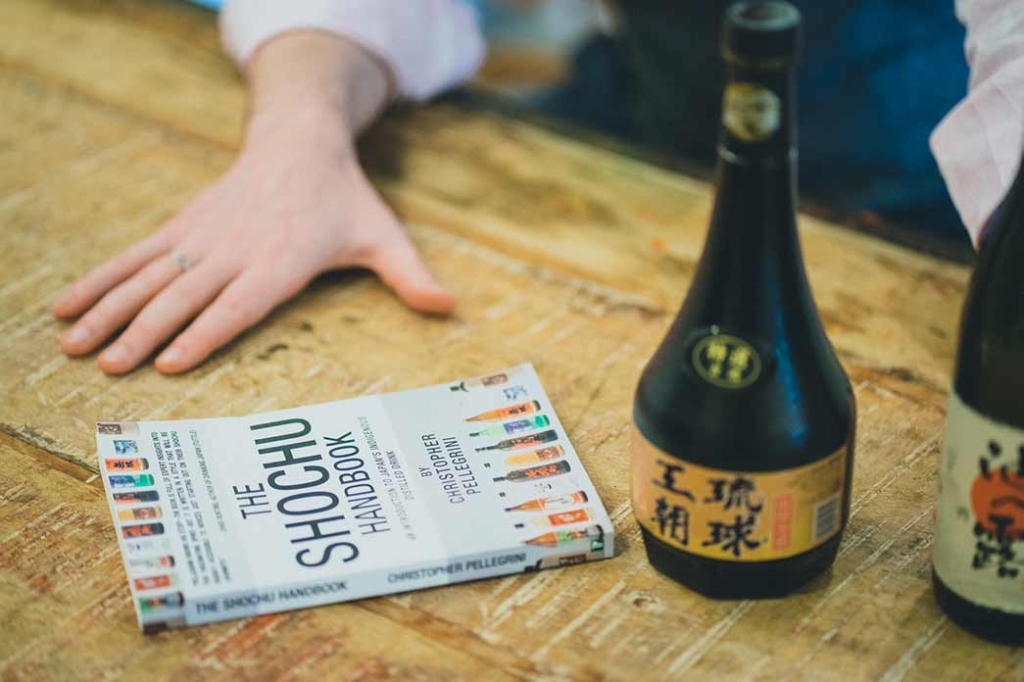
In a rare achievement for a non-Japanese professional, he earned certification as a shochu kikizakeshi (shochu sommelier). Since then, he has organized events dedicated to honkaku shochu and awamori both in Japan and abroad, steadily building international awareness. In 2014, he published The Shochu Handbook, one of the most comprehensive English-language guides to the category.
Last year, he took his commitment a step further by launching exports of honkaku shochu and awamori, accelerating his mission to bring Japan’s indigenous spirits to the global stage.
How does he view aged shochu? And what does he believe is the key to communicating its value to the world?
We sat down with him for an in-depth conversation.
_________________________________
Q: You’ve been living in Japan since 2002. What originally brought you here?
I was born in Vermont, in the northeastern corner of the United States. It’s the second least populated state in the country — there are more cows than people. I grew up in a pretty rural environment.
When I was in high school, I tried brewing beer at home using methods I learned from books. My father was a school principal, so when he found out, I got into serious trouble and had to stop (laughs). But that experience sparked something in me. I was fascinated by the idea of making alcohol.
While still in high school, I began apprenticing at a craft brewery. That’s when I realized something important: when you make good alcohol, it brings people joy.
I later went to university in London, and after that lived in Spain and South Korea. I came to Japan in 2002 at the suggestion of my then-girlfriend — now my wife. I originally planned to stay for just one year, but I’ve been here ever since.
A major reason for that is my encounter with honkaku shochu and awamori.

No Other Distilled Spirit Offers This Level of Diversity
Were you already familiar with honkaku shochu or awamori before that?
Not at all. I had an interest in Japan, but the only thing I really knew was “sake” — meaning seishu, Japanese rice wine.
One day, the owner of an izakaya I used to frequent said, “Try this today,” and poured me a glass of barley shochu. I smelled it, took a sip, and thought, What is this!?
I asked him, “This isn’t sake, is it?”
He grinned and said, “This is shochu — Japan’s distilled spirit!”
Then, still smiling, he poured me another glass — this time sweet potato shochu. I smelled it, tasted it… and it was completely different.
So I said, “…This isn’t shochu, is it?”
He laughed. “This is shochu, too!”
After that came brown sugar shochu, then sesame shochu. Each one had a completely distinct aroma and flavor profile. I was stunned.
There is no other distilled spirit in the world that shows this level of diversity — in raw materials, aroma, and taste — within a single category. The experience was so overwhelming that, even though I couldn’t speak Japanese at all at the time, I immediately flew to Kagoshima and visited several distilleries.
That was also when I began seriously studying Japanese — all to better understand honkaku shochu and awamori.
What do you think makes shochu, as a distilled spirit, so captivating — especially for someone with no prior knowledge of it?
As I mentioned before, the diversity of flavor and aroma is the first thing. Without question, it’s unmatched anywhere in the world.
Another fascinating aspect is the production method. Honkaku shochu is made using single distillation in pot stills. That may sound simple, but it actually demands extraordinary skill. While major global spirits such as whisky, gin, and mezcal are typically distilled two or more times, honkaku shochu relies on a single distillation to define its character. There’s no second chance to refine or adjust the profile — everything is decided in that one run. I find that incredibly compelling.
And then there’s terroir. Shochu is a spirit in which terroir truly matters — from the raw materials to the water to the local climate. Once you begin to notice these elements, you realize just how deep the category is. The more you learn, the more there is to discover. Honestly, the study of shochu never feels complete.
You’ve since founded your own company and are now exporting shochu. Even before that, you were organizing shochu events and seminars both in Japan and overseas. How do international audiences typically respond?
Ever since I became what you might call a “honkaku shochu geek,” I’ve felt a strong urge to share this incredible world with others. Through connections and invitations from companies, I began hosting tastings and educational seminars abroad.
When people taste honkaku shochu for the first time, the reaction is often the same as mine was: “What is this? Where can I buy it?” They’re genuinely surprised by how delicious and distinctive it is.
Even people who are familiar with sake usually have no knowledge of shochu. Some even ask, “Is this a new Japanese distilled spirit?” When I explain that it has been produced for more than 500 years, they’re even more astonished.
What truly frustrates me, especially in places like the United States, is the amount of misinformation being spread — sometimes even by the very people who should be educating others about it. Many articles about shochu contain inaccuracies, and even retailers or bartenders will casually say, “Shochu? Oh, it’s basically like vodka.”
When I hear that, I just want to knock some sense into them (laughs).
Perhaps part of that misunderstanding stems from a lack of information coming from Japan itself?
Exactly. I think that’s absolutely part of the issue.
Of course, each distillery has limits in terms of staff and budget. Not every producer has the resources to communicate internationally on a large scale. That’s why I believe there needs to be a broader, more coordinated effort to explain — in multiple languages — what honkaku shochu is, and what awamori is.
At the same time, communication shouldn’t be one-size-fits-all. It’s important to identify specific target markets and think strategically. What resonates in the United States may differ from what appeals in Europe or Asia. Taking a marketing perspective and carefully considering what message should be delivered — and to whom — is essential.
Aging Is Not About Color. It’s About Honesty
“Shochu Next” began from the perspective that aging would be an essential narrative when considering shochu’s global expansion. How do you view the role of aging in shochu?
In overseas markets where whisky culture is already deeply established, barrel aging is probably the most accessible entry point. Even in Japan, it’s interesting to see more distilleries experimenting with barrels. That said, if shochu intends to compete directly with whisky on the global stage, there are still relatively few producers who have truly mastered that approach. If we aim to position shochu as a world-class distilled spirit, more practice and refinement will be necessary.
On the other hand, many awamori are aged in clay pots — a method that offers a completely different kind of appeal from barrel aging. I think the key is figuring out how to communicate that distinction effectively.
When discussing aged shochu, the issue of Japan’s regulations on color inevitably comes up — specifically, the rule that prevents producers from presenting the natural color developed through aging. Personally, I believe that if it’s the law, then it is what it is.
Producers have found various ways to navigate this — filtering to remove color, or in some cases adding a small amount of other ingredients and releasing the product as a liqueur. But what matters most is honesty. Forcing color into a product just to meet expectations would be far worse. Consumers will always notice. And truly delicious shochu doesn’t need color to prove its worth.
In fact, as someone working to introduce honkaku shochu to the world, I see it as encouraging news that mezcal — a Mexican distilled spirit that ranges from clear to light amber — is gaining global recognition. It makes the conversation much easier. If mezcal can be appreciated without relying on deep barrel color, so can shochu.
You brought two of your favorite aged shochu today. How would you recommend enjoying them?
It was very difficult to choose, but for honkaku shochu I brought a 10-year-aged sweet potato expression, Ike no Tsuyu, from Amakusa Shuzo. For awamori, I selected Ryukyu Ocho from Taragawa on Miyako Island.
For sweet potato shochu, I strongly recommend oyuwari — diluted with hot water. With a well-aged shochu, drinking it straight or with just a splash of water is also wonderful. Depending on the alcohol content, adding just a small amount of water can gently open up the aromas.
That said, I personally drink it as oyuwari most of the time. It brings out the fragrance beautifully, it’s gentler on the body, and since the alcohol content is effectively reduced by about half, you can enjoy it for a long, relaxed stretch of time (laughs).
Could you share a food pairing for aged shochu that feels uniquely “Christopher”?
Surprisingly, aged shochu pairs beautifully with very American foods.
One combination that truly shocked me was fried chicken from Popeyes — the American fast-food chain — paired with an aged rice shochu made using atmospheric distillation. It’s an incredible marriage of flavors.
And when it comes to sweet potato shochu served mizuwari (with water) or on the rocks, pepperoni pizza works wonderfully. The richness and spice of the pepperoni complement the depth and subtle sweetness of the spirit.
I think the possibilities for pairing shochu extend far beyond traditional Japanese izakaya dishes. There’s enormous potential once we stop limiting our imagination.


I Want to Introduce Honkaku Shochu and Awamori to People All Over the World
You’ve published books such as The Shochu Handbook and have truly become a bridge between Japan and the world. How do you envision the future — for yourself and for shochu?
More than anything, I want to see honkaku shochu and awamori lined up behind bars all over the world. They deserve to stand alongside whisky, gin, and vodka.
I’ve spent years asking myself what I can do to help make that happen. That’s one reason I’m now involved in export as a business. But to be honest, like my father — who was an educator — my greatest passion lies in teaching. I want to share this remarkable spirit with as many people as possible. That desire is at the heart of everything I do.
Back in my hometown, my mother is cheering me on as well. She goes into liquor stores around Vermont asking, “Do you carry shochu?” (laughs). If honkaku shochu spreads across the world, I think she’ll be incredibly happy.
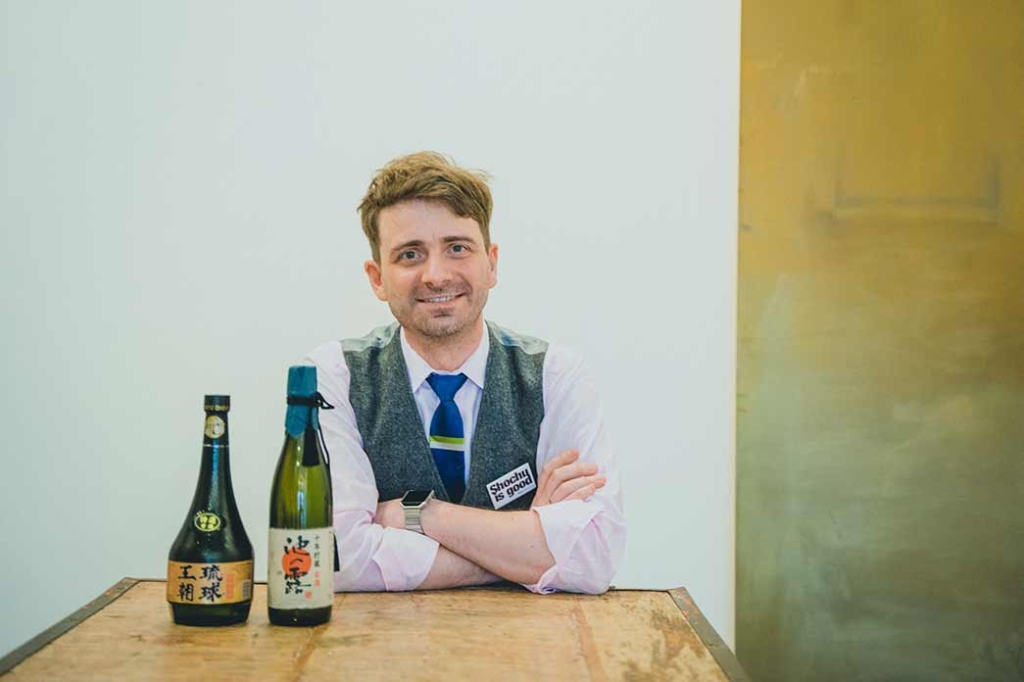
Christopher Pellegrini/Shochu Sommelier
Born in Vermont, Christopher Pellegrini is a certified shochu sommelier dedicated to introducing Japan’s food and drink culture to international audiences. He lectures at seminars on Japanese cuisine, hosts online programs, and works in food consulting, among many other activities.
He has also contributed entries on shochu and awamori to The Oxford Companion to Spirits and Cocktails, published by Oxford University Press.
He is the author of The Shochu Handbook – An Introduction to Japan’s Indigenous Distilled Drink (Telemachus Press LLC).