

In the many stages of shochu production, fermentation and distillation are, of course, essential. Yet just as important — perhaps even more so — is the storage process known as aging.
There are as many approaches to maturation as there are honkaku shochu distilleries, and each method reflects the distinct character of the producer.
For this article, we visited Shouro Shuzo in Miyazaki Prefecture to explore how aging shapes the identity of their shochu.
Nurturing the Spirit During Maturation to Preserve the Distillery’s Signature Character
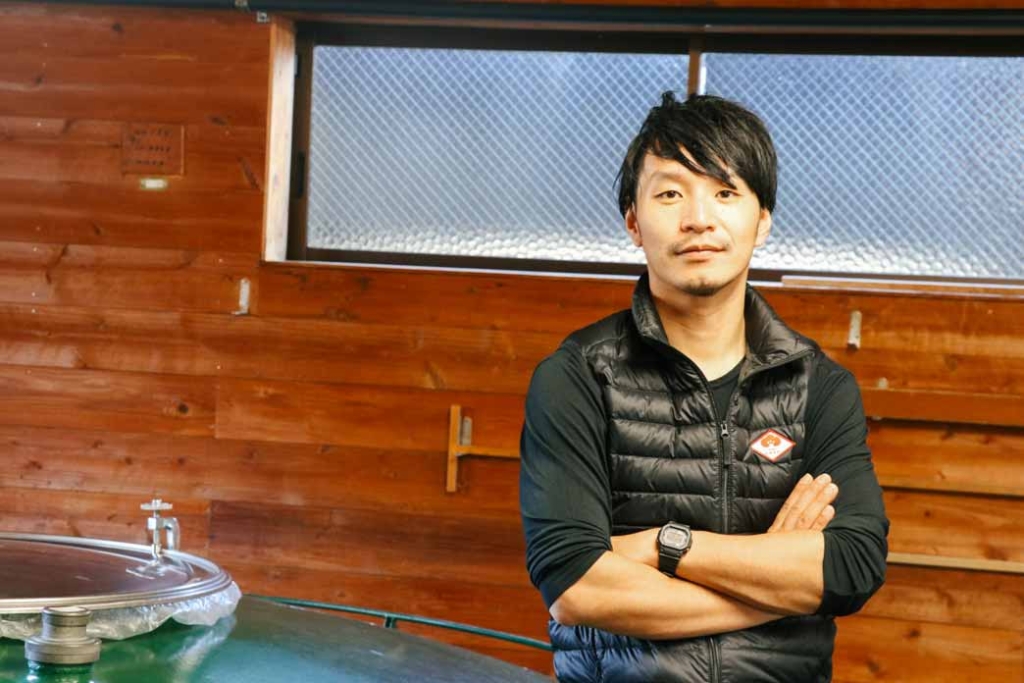
“Hon-kaku shochu’s aging is where a distillery’s personality really comes through. That’s why it has endless possibilities,” says Hiroaki Yano, CEO of Shōro Shuzo. His shochu consistently attracts a wide range of fans, both men and women. His approachable way of explaining hon-kaku shochu only adds to his appeal, and at events, the line in front of the Shōro Shuzo booth often stretches out.
Every Tuesday, he co-hosts a Zoom live show called shoucyu’s day with Shinya Nakamura of Nakamura Shuzo in Kagoshima Prefecture. The online event is designed to encourage restaurants across Japan to experience shochu firsthand. Each episode features shochu-related guests and showcases unique content. Right now, Yano is definitely one of the people you don’t want to take your eyes off when it comes to discussing hon-kaku shochu.
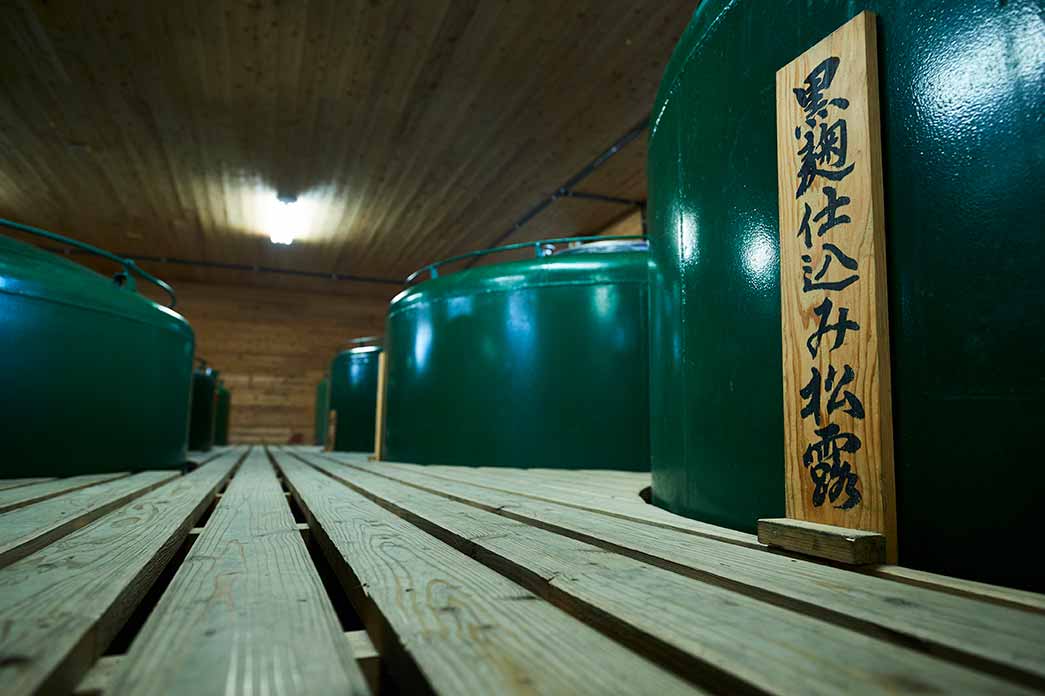
At Shōro Shuzō, once September arrives, sweet potatoes from local farmers begin to be delivered, marking the peak of production that continues through late autumn. The annual output is 1,300 koku (approximately 234,000 liters). On the brewery grounds, about 50 storage tanks of 10,000 liters each are lined up, holding freshly distilled shōchū waiting for their turn. Except for the newly distilled shōchū, all regular products are aged for at least three years.
“We’ve been using Thai rice as the koji rice since the Showa era. Thai rice, after two to three years of aging post-distillation, develops a firm sweetness and texture from the rice itself. That ensures the flavor remains consistent over time,” explains Yutaka Yano, CEO of Shōro Shuzō. While other breweries switched to domestic rice, Shōro Shuzō steadfastly continued with Thai rice because it is particularly suited for aged shōchū.
“Except for new shōchū, all products go through an aging process before shipment. During storage, we adjust each batch according to its characteristics. For example, if the tank of a regular product is running low, we blend in the same-specification distillate to maintain consistency. It’s essential to keep long-standing regular products from disappearing. Nurturing the distillate during aging stabilizes the brewery’s overall quality. Of course, even regular shōchū can never taste exactly the same every year; we always look for ways to improve the quality. Properly managing the aging process is critical to producing delicious shōchū. Moreover, with careful adjustment, the same-specification distillate can produce completely different flavor profiles. That’s another potential of the raw distillate.”
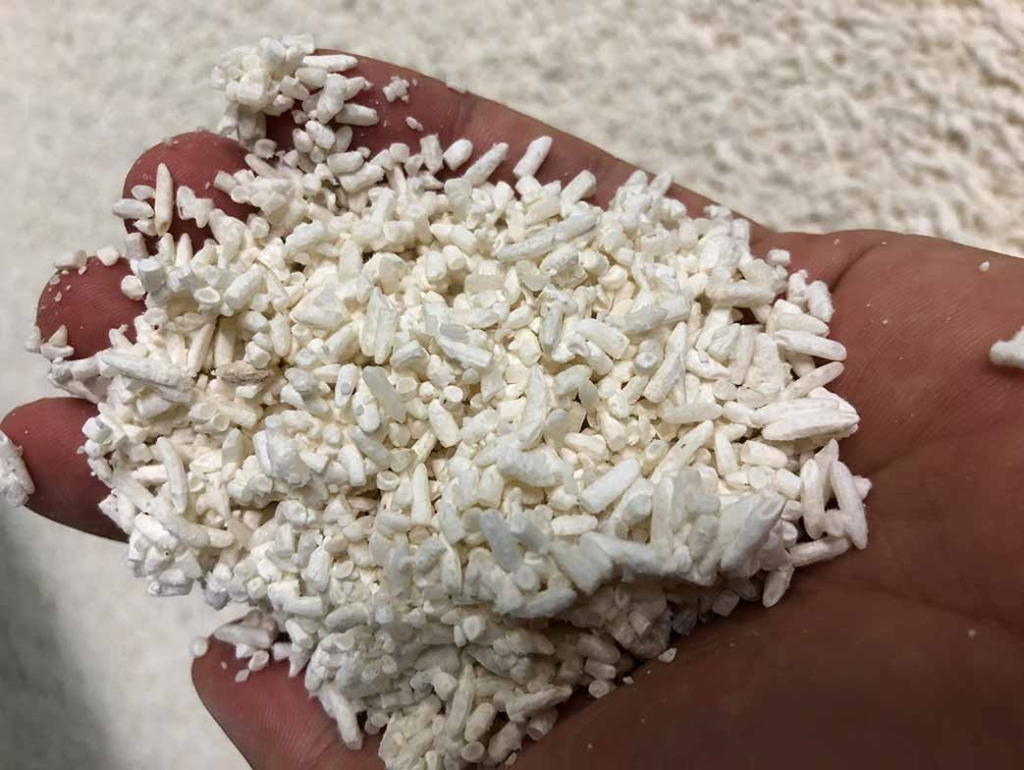
Image courtesy of Shouro Shuzo.
Nurturing the Distillate During Storage to Craft Delicious Shochu
After distillation, honkaku shochu is transferred to storage tanks as the undiluted distillate. This period allows gases to escape from the liquid and removes excess oils, while developing flavors such as sweetness, richness, and roundness. If a freshly distilled shochu is like a newborn, then its time in storage could be compared to elementary, middle, and high school, and the fully matured distillate is like an adult stepping into society. It is during this storage period that the characteristics of each brewery begin to emerge.
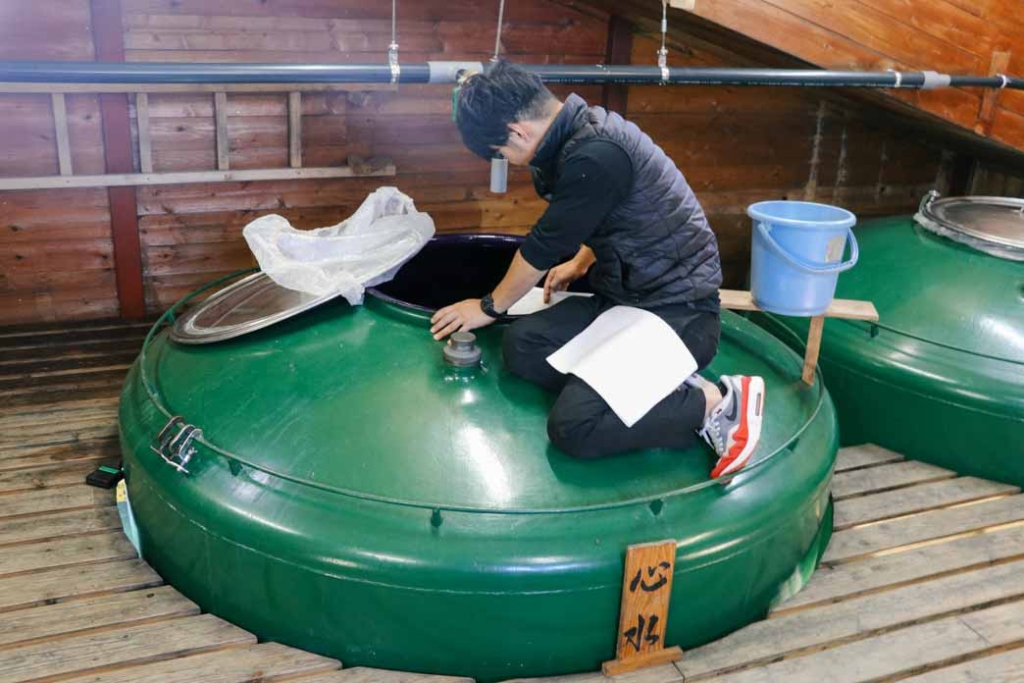
But this storage phase is not simply a matter of letting the distillate sit in the tank. Brewers carefully monitor the condition of the distillate, thinking ahead to its state at the time of shipment. Depending on its condition, they may stir it with a large paddle called a kai-bō, or filter it to adjust its flavor.
“It’s always gratifying when people enjoy the new distillate right after distillation. But at the same time, I’m already thinking about what this shochu will be like in two or three years—so I’m never fully at ease (laughs). By the time it’s matured, it has to taste even better. The filtration we do during storage removes excess oils from the distillate, and that part is probably the most nerve-wracking. Using filter paper, we scoop out the oils, but those oils contain much of the shochu’s flavor and aroma. If we take too much, all that’s left is plain alcohol. And once the oils are removed, there’s no putting them back. Of course, we record data on how much oil we’ve removed, but each year the climate changes, and the distillate is different. There’s no perfect method for filtration. What you can trust are your senses—your sight, smell, and taste—when you check the tanks. You have to stay close to the distillate and feel it, more than think about it.”
Each distillate has its own character. Even if it doesn’t take shape in the first year, over three, four, or five years, brewers continuously work to bring out its best qualities. That is the true pleasure of the storage and aging process.
“Even if things don’t go as planned with the new distillate, there are endless possibilities yet to be realized. Watching various qualities emerge little by little over time is fascinating,” says Mr. Yano. By working closely with the distillate, he constantly learns about the unknown potential of honkaku shochu. It’s this hands-on experience that likely allows him to speak so eloquently and convey the appeal of shochu in ways that are easy for everyone to understand.
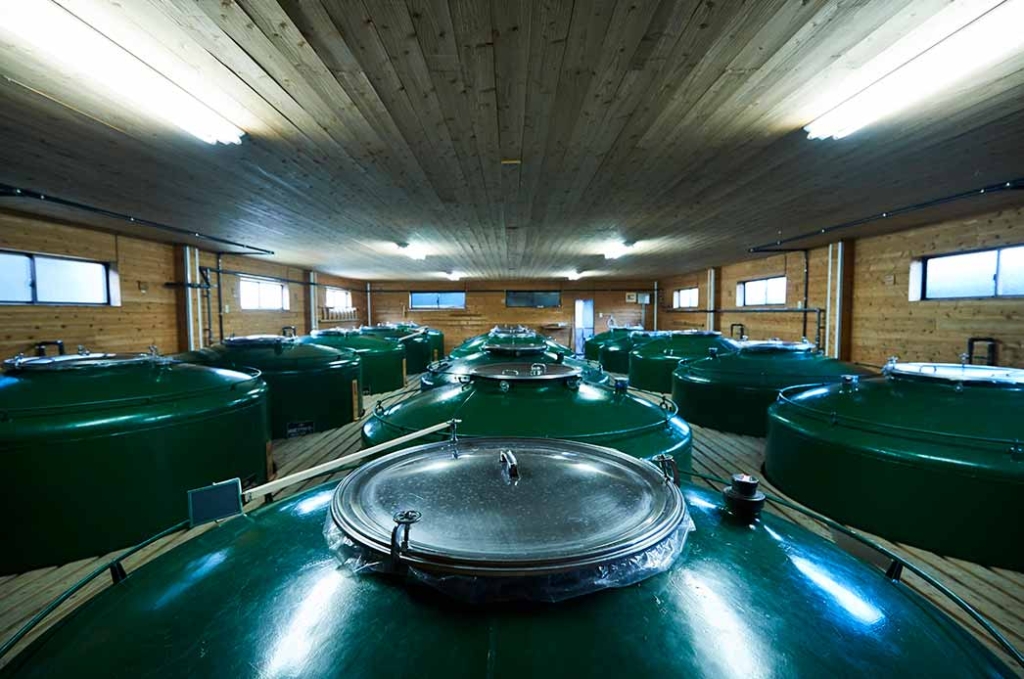
Image courtesy of Shouro Shuzo.
Enamel Tanks: Fostering Healthy, Well-Rounded Distillate
Shōro Shuzō uses enamel tanks for aging its distillate. When thinking of storage, one might imagine wooden barrels or earthenware jars as more romantic… but according to Hiroaki Yano, they’re actually harder to manage consistently than enamel tanks when it comes to keeping the distillate stable and well-matured.
“Generally, the larger the storage container, the more freely the distillate can age. Just like people can stretch out and relax more easily in a spacious room than a cramped one (laughs). With a tank, once the lid is sealed, it’s airtight, so there’s minimal evaporation and no hygiene issues. Enamel has gentle temperature fluctuations, and the interior is coated with glass, which protects the liquid from outside influence. On top of that, it’s easy to check the bottom and edges of the tank. Aging is the longest step in shōchū production, so it’s important that both the distillate and the people handling it can work comfortably. Thanks to these enamel tanks, we can properly nurture both our regular lineup and new releases. The storage room is an essential world for any distillery.”
The distillate is alive. Sometimes it matures faster than expected, or develops flavors in directions no one anticipated. For that reason, once he starts paying attention, Yano says he visits the storage room multiple times a week.
The Potential of Honkaku Shochu, at Home and Abroad, Lies in Its Aging
In recent years, Shouro Shuzo has introduced new labels in addition to its regular lineup. One of these, released a few years ago, is Shouro Colorful, a blend of Tamakane made with white koji and Miyazaki Beni made with black koji. Its vibrant, orange-like aroma—completely different from the traditional, robust image of Shouro Shuzo—has attracted many female fans. The combination of these two types of shochu came from noticing how each developed unique aromas and flavors during aging.
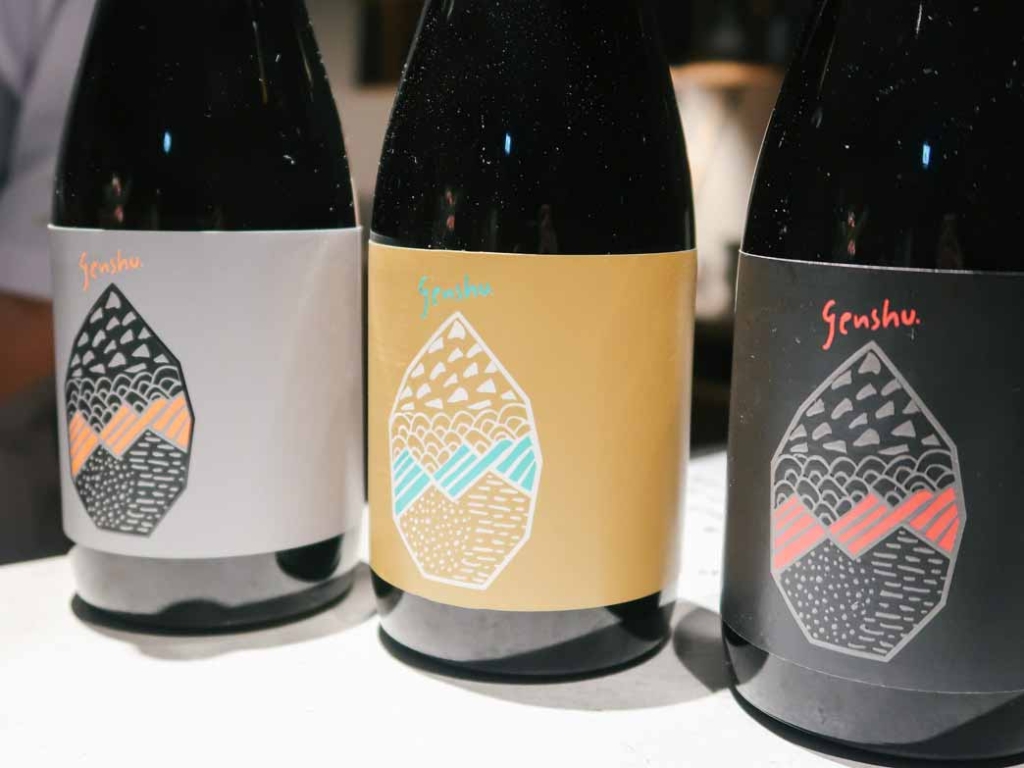
Furthermore, in the fall and winter of 2020, genshu. was launched as a way to introduce Honkaku Shochu to the world.
The project was conceived over approximately two years and consists of three types. The first, genshu. Miyazaki Beni, is the aged distillate of the regular Shouro Black Koji shochu, matured for over three years. The second, genshu. Rice Aged, is a long-aged rice distillate distilled in 2004. The third, genshu. Tamakane, is a white koji distillate of Tamakane. Each has a rich, distinct personality, with layered aromas, umami, roundness, and softness. All of these are carefully aged in Shouro Shuzo’s storage facilities.
“Honkaku Shochu still has low recognition worldwide. Many foreigners assume that clear spirits cannot be aged—they are used to whiskey and new make, where color signifies maturation. I want to tell them, ‘Yes, Honkaku Shochu develops color too, especially in barrels!’ But the reality is that in our category, we cannot sell overly colored shochu. Even without color, time in storage allows the shochu to mature properly. This subtle, nuanced change is uniquely Japanese—it’s something the rest of the world cannot replicate.
The world mainly knows distilled spirits, so our first goal is to get people to understand Japanese distillates. We still have a long way to go in spreading the word. That’s why we, as Honkaku Shochu makers, must share the appeal of our shochu both domestically and internationally. The history of our breweries and production is important, but the most universally understandable message is simply that it tastes good. We have a category of distillates whose alcohol content is close to global standards—and they are in our storage tanks. There’s still much to research, and many ideas to explore, to further perfect the aging process and solidify the world of matured Honkaku Shochu.”
Through Yano-san’s passionate words, the world of Honkaku Shochu’s storage and aging comes to life. And it is only just beginning.

| Shoro Shuzo |
|---|
| Address:1-17-5 Terasato, Kushima City, Miyazaki Prefecture, Japan WEB:shouro-shuzou.co.jp |
Shoro Shuzo‘s “genshu.” series
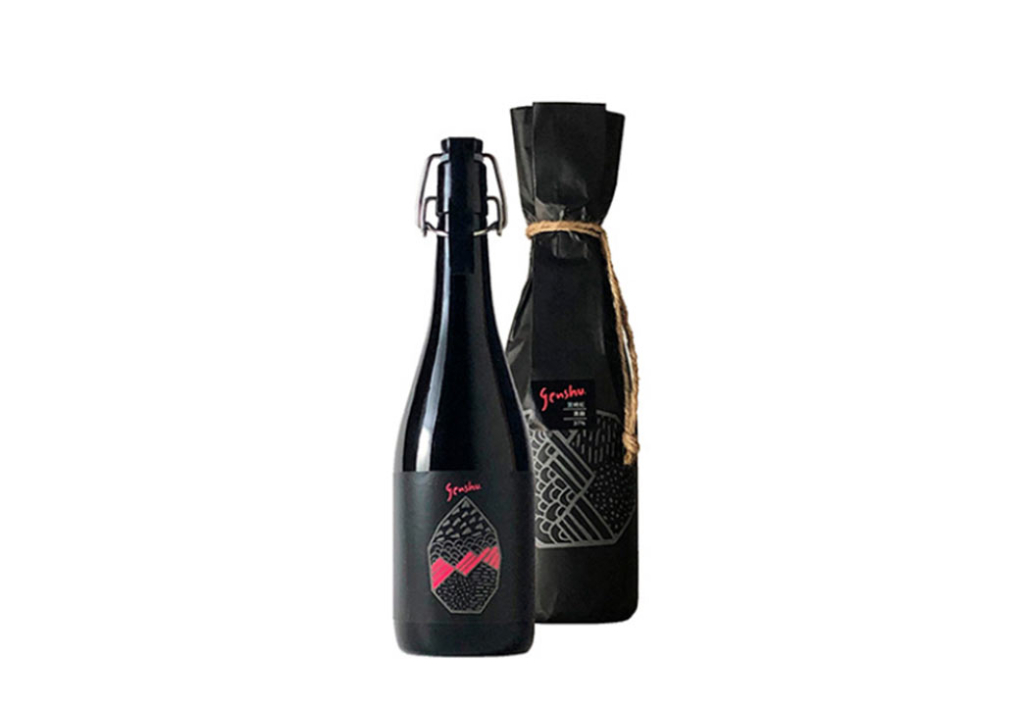
| genshu. Miyazaki Beni |
|---|
| [Imo Shochu / Sweet Potato Shochu] Aging:3 years / Enamel tank Alcohol:37% Ingredients:Miyazaki Beni sweet potato, rice koji (Thai rice), black koji Distillation:Atmospheric distillation Distillery:Shoro Shuzo Location:Kushima City, Miyazaki Prefecture, Japan |
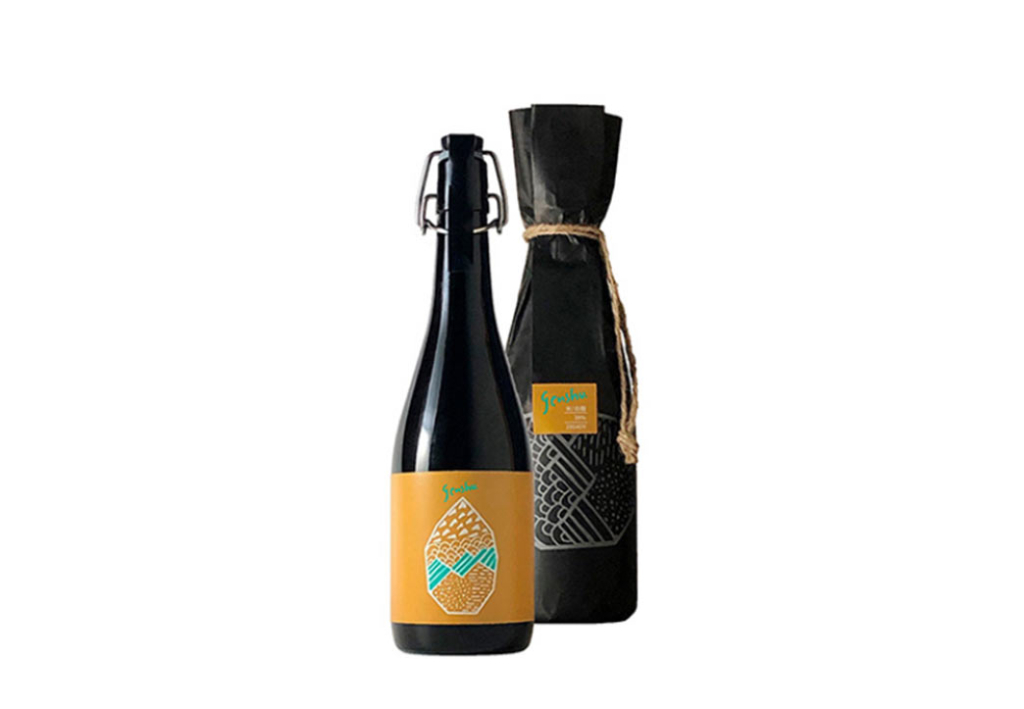
| genshu. Rice Aged |
|---|
| [Kome Shochu / Rice Shochu] Aging:16 years / Enamel tank Alcohol:39% Ingredients:Rice, rice koji (Thai rice), white koji Distillation:Atmospheric distillation Distillery:Shoro Shuzo Location:Kushima City, Miyazaki Prefecture, Japan |
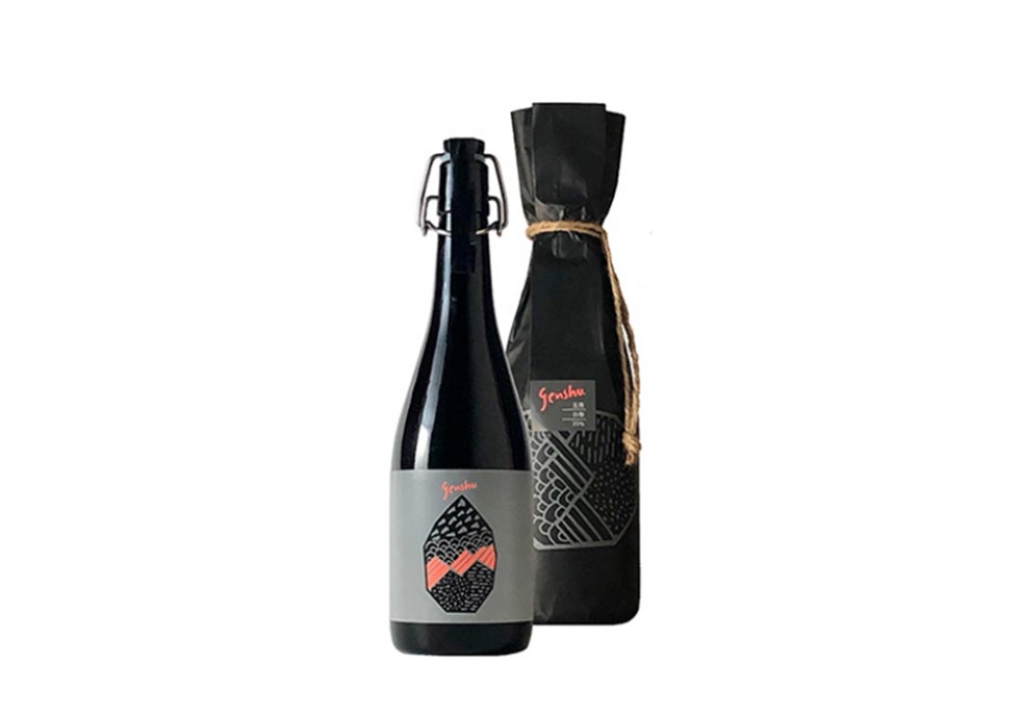
| genshu. Tama Akane |
|---|
| [Imo Shochu / Sweet Potato Shochu] Aging:Blend of 2-year and 3-year aged shochu / Enamel tank Alcohol:35% ABV Ingredients:Tama Akane sweet potato, rice koji (Thai rice), white koji Distillation:Atmospheric distillation Distillery:Shoro Shuzo Location:Kushima City, Miyazaki Prefecture, Japan |