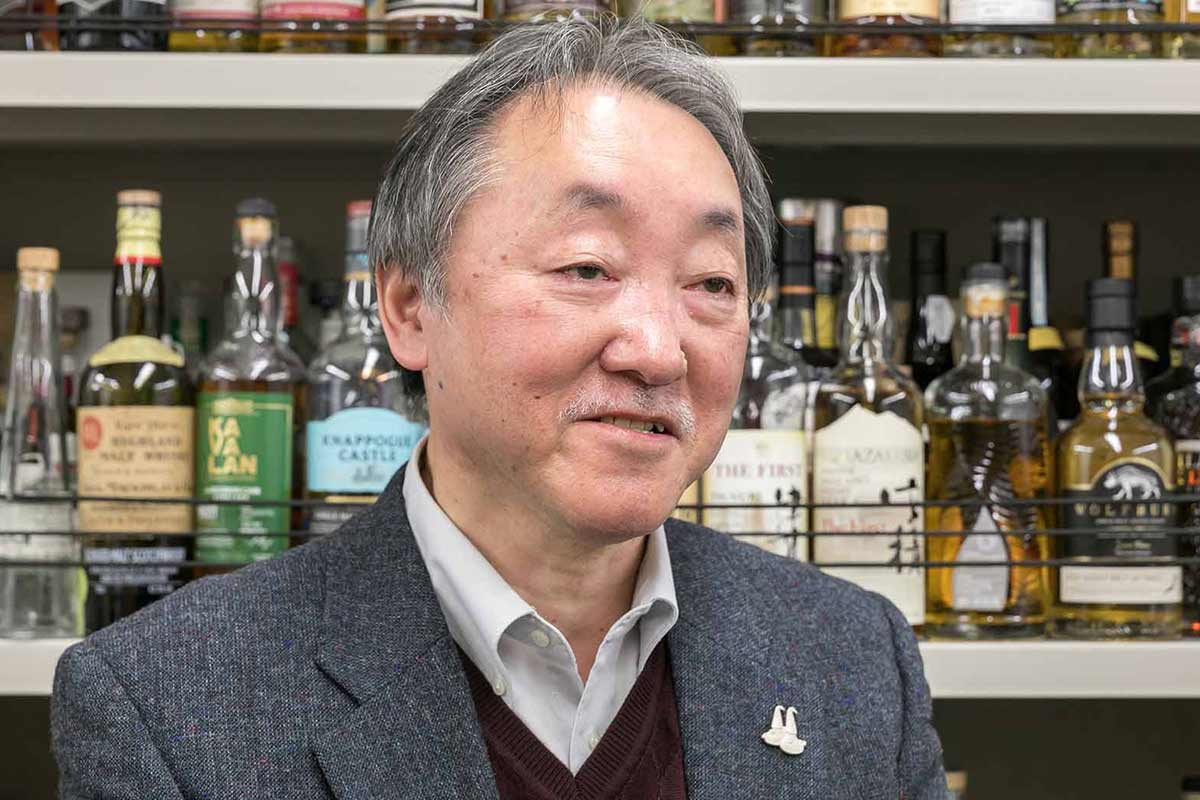


Launched in 2019 as Japan’s only competition dedicated to whisky and spirits, the Tokyo Whisky & Spirits Competition (TWSC) initially featured only Western spirits. The addition of a shochu category from its second edition last year was undoubtedly major news for the shochu industry.
*Serving as the executive chairman of TWSC is Mamoru Tsuchiya, a renowned whisky critic. As early as the 1980s, he turned his attention to Scotch single malts and deepened his expertise, later publishing The Complete Guide to Malt Whisky (Shogakukan) in 1995. He also supervised the NHK morning drama series Massan (*1) in 2014, playing a key role in sparking Japan’s widespread enthusiasm for single malt whisky as we know it today.
How would shochu be evaluated at TWSC? This was a question shared by many within the industry. With this year’s competition already underway following the close of entries at the start of the year, anticipation continues to build.
With unparalleled knowledge and experience in global spirits, including whisky, how does Tsuchiya view the world of shochu today? Daiki Nakayama, Editor-in-Chief of SHOCHU NEXT, sat down with him to find out.
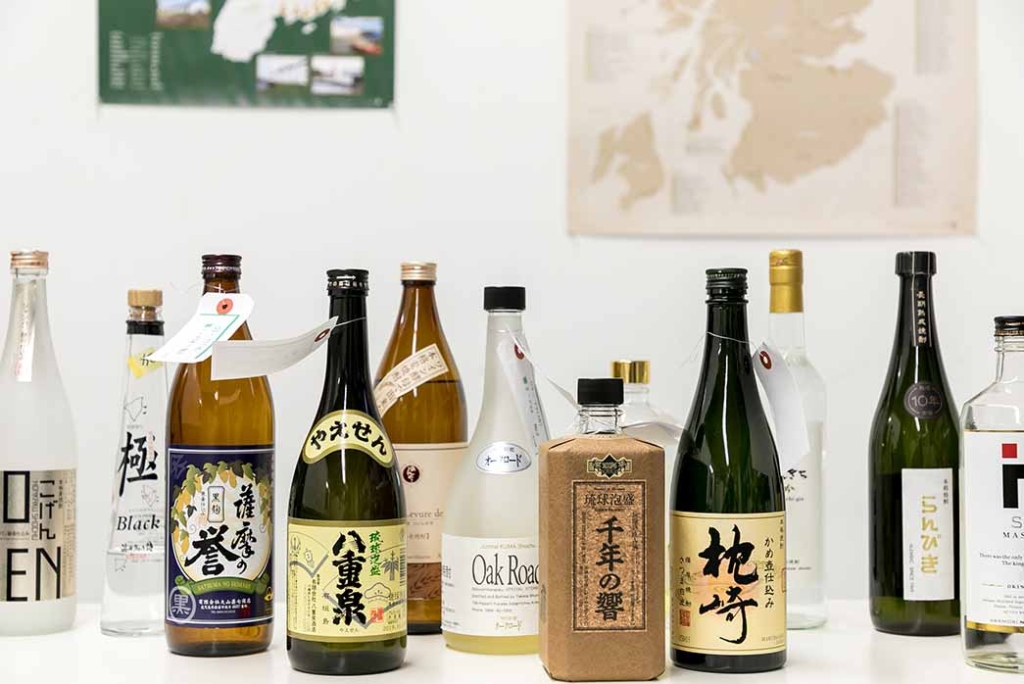
Award-winning shochu from last year’s Tokyo Whisky & Spirits Competition (TWSC).
Daiki Nakayama (hereafter, Nakayama): Thank you very much for taking the time to speak with us today. To begin, could you tell us what led to the establishment of the shochu category at TWSC starting last year?
Mamoru Tsuchiya (hereafter, Tsuchiya): The original reason we launched TWSC was that we wanted to create a platform where spirits could be judged from a uniquely Japanese perspective—one rooted in the refined palate of Japanese tasters. I had long wanted to organize a spirits competition, but it wasn’t until 2019 that we were finally able to hold it. By that time, gin had become a global trend following whisky, the number of distilleries and brands had increased both in Japan and overseas, and the 2020 Tokyo Olympics were also on the horizon. In other words, the timing was right.
Although there were many challenges, we managed to successfully complete the first competition. The reason we introduced a shochu category in the second edition was, quite simply, because shochu is Japan’s representative distilled spirit. We also wanted to see how it would be evaluated by those from the world of Western spirits, and to gain feedback for the shochu industry from a more global perspective.
40% for Competing with the World, 25% for Growth as a Food-Friendly Spirit
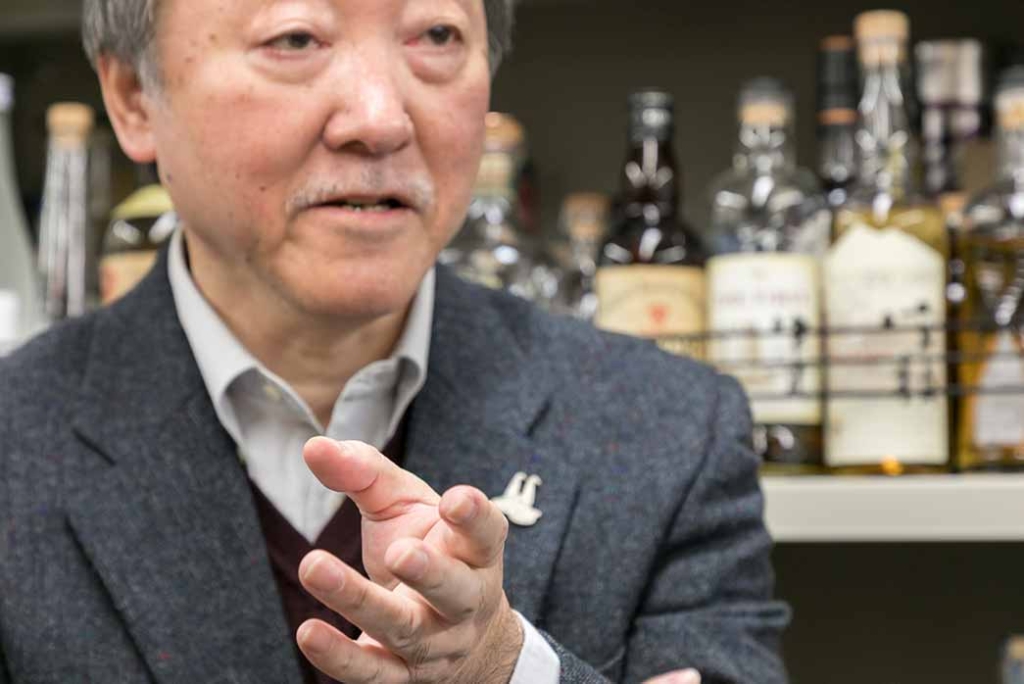
Tsuchiya attributes his field-oriented approach—seeking to understand his subjects “thoroughly and comprehensively”—to his days in a university exploration club.
Nakayama: In last year’s shochu category, there were 258 entries, with 15 awarded the highest Gold Prize. Notably, nine of them had an alcohol content of 30% or higher, including Kodai Ikko by Rokuchoshi Shuzo, Tenshi no Yuwaku by Nishi Shuzo, and Yaesen Barrel-Aged by Yaesen Shuzo. I feel this is quite a remarkable point.
Tsuchiya: Yes, I think that was partly due to the large number of judges from the world of Western spirits last year. People who work with Western spirits on a daily basis are accustomed to drinking spirits at around 40% to 50% ABV. Whether it’s Scotch or Cognac, it’s almost unheard of for distilled spirits to be below 40%.
So when it comes to shochu, which is typically around 25% ABV, they may feel that there is less aromatic “content” the moment they bring the glass to their nose. Compared to what they are used to, it can come across as quite light.
That said, it doesn’t mean that lower-alcohol shochu is inferior. In fact, six of the top Gold Prize winners were 25% ABV expressions, such as Kogen by Takamasamune and Satsuma no Homare Kurokoji by Oyama Jinshichi Shoten. Personally, I think 25% is a very special—almost magical—level of alcohol. It works well neat, but also as a food-friendly spirit when diluted in advance (maewari) or gently warmed.
When you look at distilled spirits around the world, there are very few—if any—besides Japanese honkaku shochu that can truly be enjoyed with meals. That is an enormous advantage for shochu. It is a rare spirit that has evolved in close connection with local food cultures. Both producers and consumers should recognize this more consciously.
However, when we consider how to appeal to global markets—where people are accustomed to drinking whisky or brandy neat, often as a digestif—it is also true that products around 25% ABV alone may not be sufficient.
Nakayama: A similar point was raised when leading French sommeliers tasted honkaku shochu and awamori through an exchange program linked to Kura Master(*2) in France. They commented that, when properly chilled and served in a wine glass, shochu could be received as an excellent spirit, comparable to other drinks from around the world.
In the shochu industry, we have long heard the argument that “shochu cannot compete globally because its alcohol content is too low.” But it seems that perspective may depend on how it is presented. For some producers, could it become necessary to adopt a dual approach—continuing to focus on 25% ABV for the domestic market, while introducing higher-proof, undiluted expressions for overseas markets?
Tsuchiya: I think that is a very viable direction. Broadly speaking, you could position shochu in two ways: around 20–30% ABV as a food-friendly spirit, and 40% or higher for products that engage more directly with other global distilled spirits.
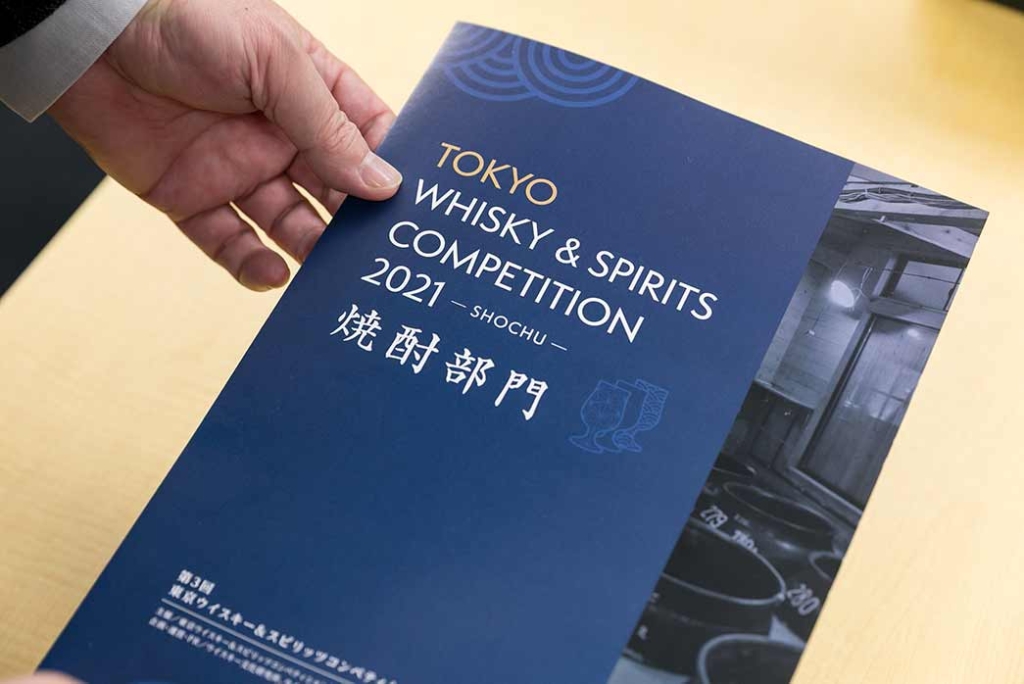
The official brochure for the Shochu Category at TWSC 2021 (entries have already closed). What kinds of shochu will take the top honors this year?
Nakayama: You first encountered Scotch single malt in 1988 while working in the UK. You were struck by its flavor, and when you told your colleagues in London, they were the ones who found it unusual—saying, “I can’t drink something that smells like that!” It’s been 30 years since then. The world has completely changed, and today single malt is at its peak.
I can’t help but see parallels with the current situation of honkaku shochu. Among younger generations, shochu is mostly consumed as a mixer in drinks like chu-hai, typically using continuously distilled “korui” shochu. Meanwhile, honkaku shochu is still often avoided for being “too smelly” or having strong, distinctive flavors.
Looking at the Scotch whisky scene, we’ve clearly moved from an era that favored light, easy-to-drink styles to one that embraces rich individuality. I hope the same kind of shift will happen in the world of shochu as well.
Tsuchiya: The key words are individuality and diversity. And this isn’t limited to alcohol—food culture as a whole is moving in that direction.
Division of Roles Between Producers and Communicators, and Educating Consumers
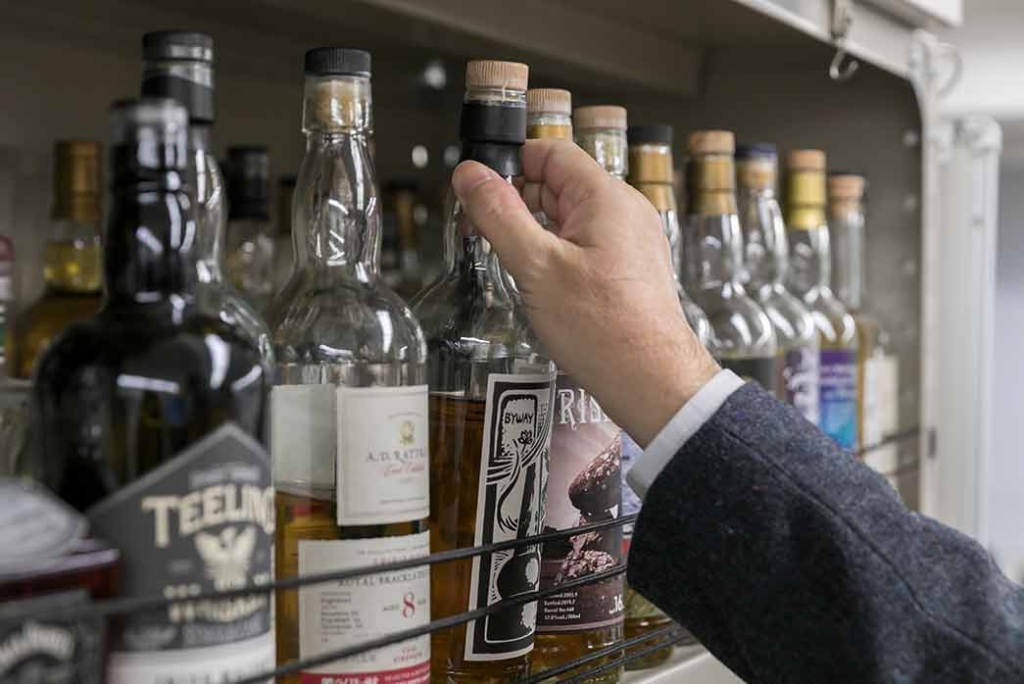
Shelves at the Whisky Culture Research Institute, lined with a beautiful array of spirits from around the world, including whisky.
Nakayama: I’m involved in exporting mainly shochu as part of a specialized trading company for Japanese alcoholic beverages. From that perspective, when I look at the whisky world, I sometimes feel envious that it has someone like you, Tsuchiya-san (laughs). You’ve published The Complete Guide to Malt Whisky, which comprehensively covers distilleries in Scotland, and you also produce Whisky Galore.
It feels like shochu still lacks that kind of presence. To be honest, that was part of the motivation behind launching SHOCHU NEXT, even though it may sound a bit presumptuous. From your perspective—grounded in whisky but with deep knowledge of spirits worldwide—what do you think is currently missing in the world of shochu?
Tsuchiya: It’s true that, in the world of honkaku shochu, there isn’t yet a comprehensive book or media platform that covers everything. I’m sometimes asked to write about shochu, but even then, there’s no single resource I can point to and say, “This will tell you everything.”
Today, producers themselves are able to communicate directly, but what they want to convey and what consumers want to know are often not the same. There are, what, around 500 shochu distilleries in Japan? That’s a number you could realistically cover (laughs). You should definitely take it on.
Nakayama: That’s exactly right. Many shochu producers are incredibly capable. Nowadays, they have their own websites and social media, and they handle communication themselves—but I also hear that it can be quite exhausting for them.
Tsuchiya: Every distillery has its own story. But that story isn’t always the same as what the producer believes it to be. It’s something that should be shaped by a communicator—someone who can tell it from the outside. I think producers should, to some extent, entrust that role to others.
Through my work with Whisky Galore, I’ve had the opportunity to visit shochu distilleries, and I often feel that there are many aspects of the production process that would greatly հետաքրք հետաքրք excite spirits enthusiasts around the world—especially whisky fans—yet those points are not being communicated at all.
Over the past 15 years or so, Scotch whisky distilleries that welcome visitors have begun to disclose virtually every detail of their production: the origin of the malt and yeast, the volume of each batch, the yield of wort, fermentation times, distillation systems, even the angle of the pot still neck. Even the staff leading distillery tours are able to explain these details thoroughly.
This is because, around 2005, the concept of “Education” began to gain prominence in the Scotch whisky world. Whether a spirit is ultimately consumed depends on whether people become fans of it—or of the distillery itself. And what defines a fan? The desire to know everything. So they share everything.
By cultivating fans—educating consumers—you also encourage more active feedback from those who drink it. That, in turn, creates a positive cycle.
Nakayama: I see. Of course, certain trade secrets must be protected, but sharing this kind of data also leads to greater transparency in production.
Tsuchiya: Exactly. The world of honkaku shochu may also need to embrace this kind of “Education.” By making various data available, knowledge and understanding will naturally evolve.

The magazine Whisky Galore. Tsuchiya laughs that he runs it “entirely as a personal passion project,” but through the publication, he has steadily cultivated a devoted community of whisky enthusiasts.
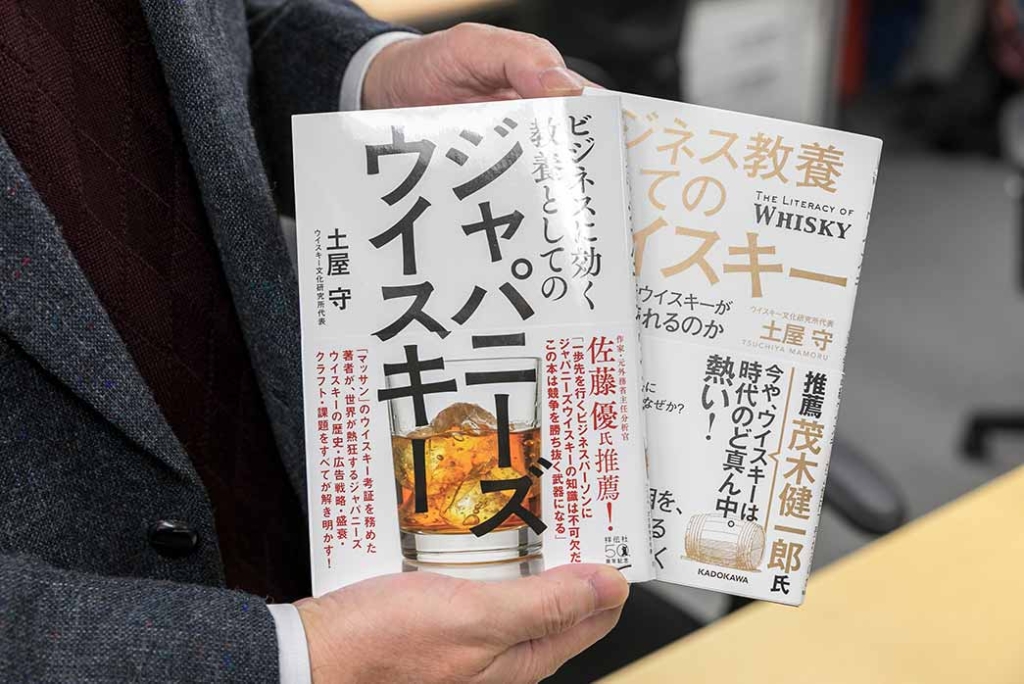
Tsuchiya is also a prolific author. His recent works include Japanese Whisky as Business Literacy (Shodensha) and Whisky as Business Literacy (KADOKAWA).
Expanding the Potential of Aged Shochu
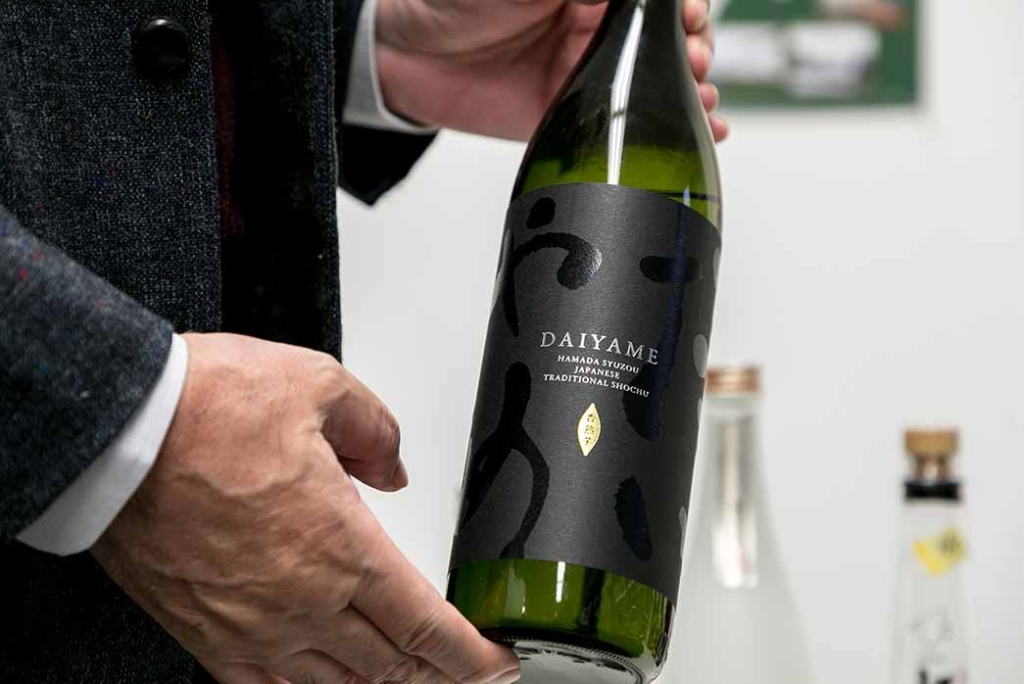
Hamada Shuzo’s DAIYAME, which won a Gold Prize at last year’s TWSC, is made using specially aged sweet potatoes known as “Kōjuku-imo.” Tsuchiya notes that he also sees potential in “aging” processes beyond storage, such as in the raw materials themselves.
Nakayama: Let me return briefly to TWSC. Among the award-winning products, there were quite a few aged shochu, including Sato no Akebono Gold by Machida Shuzo, which received the “Best of the Best” award, Den-en Envejecida by Den-en Shuzo, which won the highest Gold Prize, and Mellow Kozuru Excellence by Komasa Jyozo, which received a Gold Prize. From your perspective, how do you see the current state of shochu aging?
Tsuchiya: Personally, when it comes to shochu around 20–30% ABV, I don’t feel there’s a significant difference between storage methods—whether in tanks, earthenware jars, or wooden casks. The differences become more apparent with higher-alcohol expressions. And in that context, cask aging is particularly noteworthy.
In the worlds of whisky and Cognac, there’s almost a saying that “whoever masters the cask masters the spirit.” Knowledge about casks has evolved tremendously. Needless to say, in cask aging, the filling strength is extremely important.
In Scotch whisky today, casks are typically filled at around 63% ABV, while for bourbon—partly due to legal requirements—it’s around 55%. Reaching these standards has taken considerable effort by each distillery. They carefully experiment to determine which filling strength produces the best results in their casks—adjusting the ABV of the new make spirit in small increments of 2–3%, while keeping other conditions constant, and accumulating data on the resulting flavors.
Over the past 20 years, distilleries have built up this data and are only now arriving at their own optimal filling strengths. In fact, in the world of wine, some producers even specify the average tannin levels of the oak staves used for barrels. That’s how far the global understanding of casks has progressed.
For aged shochu, casks will become increasingly important going forward. At the same time, there are several issues to consider. One is the bottling strength. Under Japan’s liquor tax law, honkaku shochu is limited to a maximum of 45% ABV, which presents a significant constraint.
Spirits such as whisky, gin, and brandy have minimum bottling strengths defined, but no upper limit. That allows them to be cask-filled at levels like 55–65% ABV. Given how much attention global spirits producers pay to cask filling, it wouldn’t make sense for shochu to approach it without precision. Shochu, too, should identify the optimal filling strength for cask aging.
This will likely differ from one distillery to another—and also depending on the raw materials and yeast used. It’s not even certain that oak is the best option for shochu, as it is for whisky. In an extreme case, it’s possible that barrels made from camphor wood in Kyushu could prove ideal. I would very much like to see that explored.
Naturally, aging takes time. And building knowledge in this area cannot be rushed. If we don’t start now, it will be too late. Whether aged shochu can truly evolve will depend on whether we can adopt this kind of mindset.
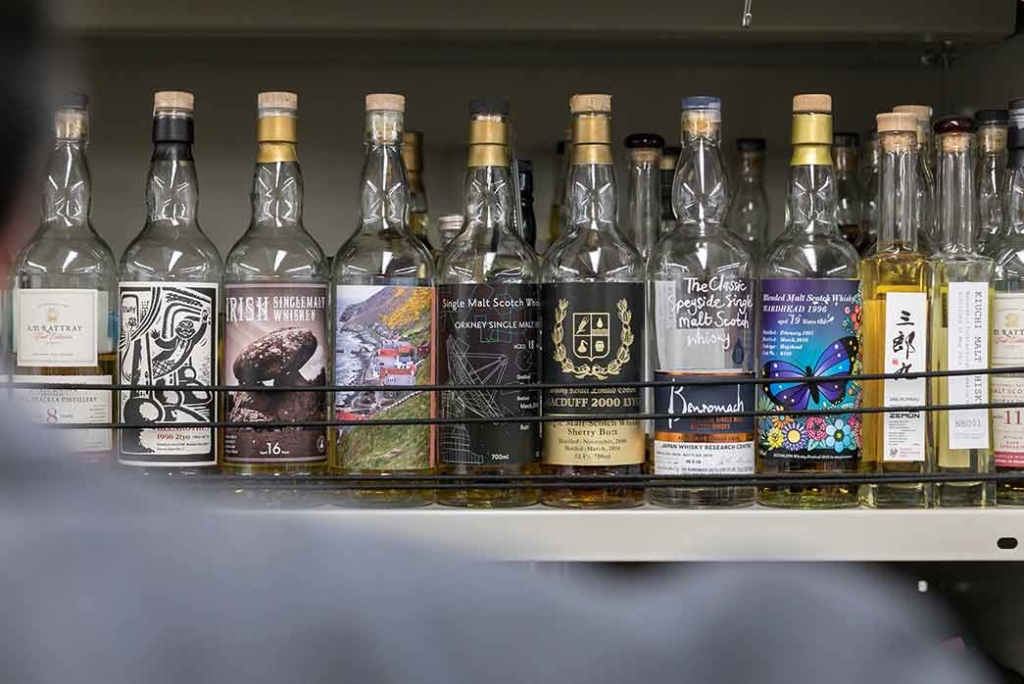
Among the rows of bottles on display are also original releases from the Whisky Culture Research Institute.
Nakayama: Speaking with you, I feel that the strengths of shochu become much clearer. In the whisky world, for example, it’s perfectly natural to highlight casks—like Kavalan releasing products that prominently feature sherry casks in their names.
By contrast, in the case of aged shochu, there are still relatively few brands that clearly communicate how their products are aged or for how long. Even some long-term aged expressions (*3) do not explicitly emphasize this aspect.
For producers, it may simply be something so obvious that it goes without saying. However, when it comes to educating consumers and expanding distribution channels, it would be greatly beneficial to share such information more openly.
Tsuchiya: As I mentioned earlier, in addition to alcohol content regulations, shochu is also subject to color restrictions—specifically, limits on optical density (*4).
There are few, if any, distilled spirits with such a wide variety of raw materials, and that can also be enjoyed with meals. In that sense, shochu has even deeper roots in its local environment than whisky, and its potential is virtually limitless.
And yet, it’s truly unfortunate that these regulations are restricting that potential. I would say that they are, in fact, stifling the very possibilities that shochu inherently possesses.
Staying at the Forefront of Spirits Information, Tracking Global Trends
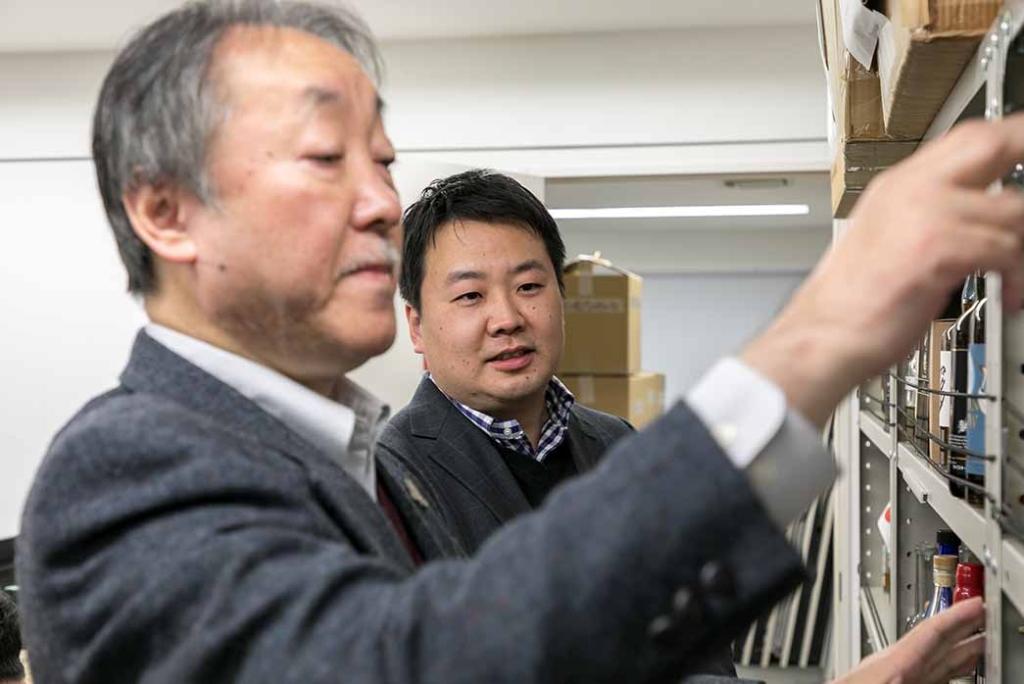
Their discussion on the world of spirits could go on forever.
Nakayama: This year marks the 20th anniversary of the Whisky Culture Research Institute, where you serve as president. You’ve made remarkable contributions to the whisky industry, and now, through initiatives such as TWSC, you are also supporting shochu as a fellow category of distilled spirits.
As you reach this milestone, could you share your outlook for the future?
Tsuchiya: When we first started as the Scotch Culture Research Institute, there were just two of us. I never imagined it would continue this long or grow into what it is today (laughs).
At the time, the entire whisky industry—whether Scotch or Irish—was at a low point, and Japanese whisky continued its decline until around 2008. In those early days, we believed our mission was to build a comprehensive database of whisky-related knowledge.
But now, our perspective has changed. New distilleries and new insights are constantly emerging around the world. Our mission today is simply to keep up with them—to stay at the very forefront of information.
To be honest, TWSC is not exactly a profitable event (laughs), but we run it with a strong sense of purpose: to raise awareness of the world of spirits among both industry professionals and the general public.
Another major goal is to cultivate Japanese judges through the competition. For example, ten years from now, as judges gain experience through TWSC, I believe Japan’s distilled spirits industry will become even more vibrant.
Nakayama: Thank you very much for such an insightful and inspiring conversation. As someone involved in the shochu industry, I feel personally encouraged as well.
The next time we meet will be at our launch event. I look forward to it.
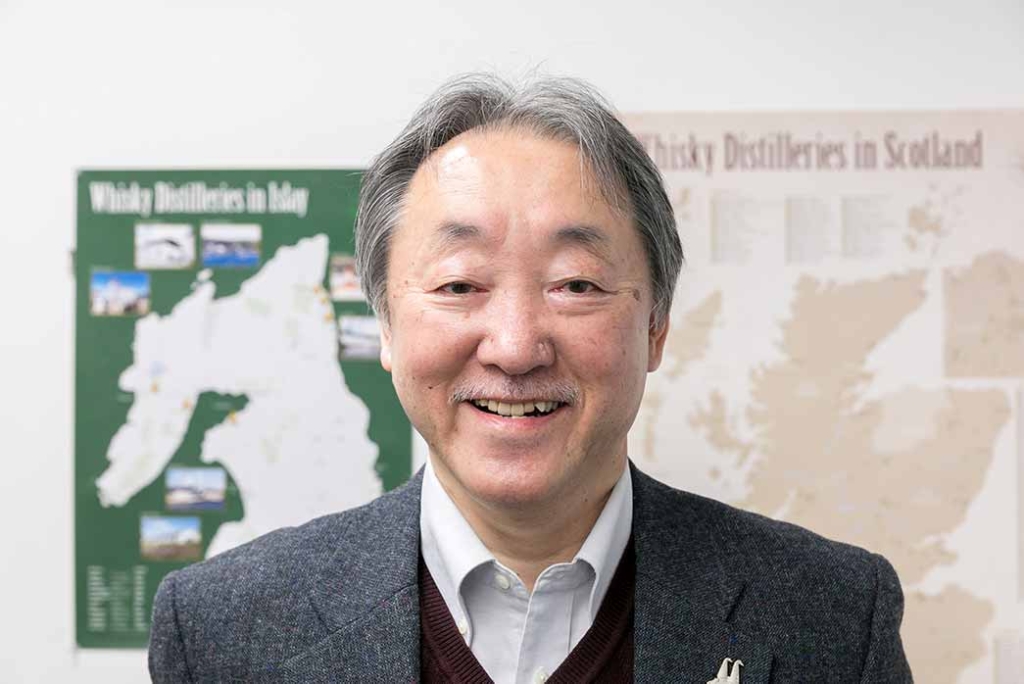
Mamoru Tsuchiya
Writer, journalist, essayist, and whisky critic. Representative of the Whisky Culture Research Institute and Editor-in-Chief of Whisky Galore.
Born in 1954 on Sado Island, Niigata Prefecture, Japan. Graduated from the Department of Japanese Literature at Gakushuin University. After working at the editorial department of FOCUS magazine (Shinchosha), he moved to London in 1987.
While serving as editor-in-chief of a Japanese-language information magazine, he encountered single malt whisky for the first time during a visit to Scotland, which led him to immerse himself in the world of Scotch whisky.
In 1998, he was selected by Highland Distillers as one of the world’s top five whisky writers. In 2001, he founded the Scotch Culture Research Institute (now the Whisky Culture Research Institute). Since 2019, he has served as the Executive Committee Chairman of the Tokyo Whisky & Spirits Competition (TWSC), which he also organizes.
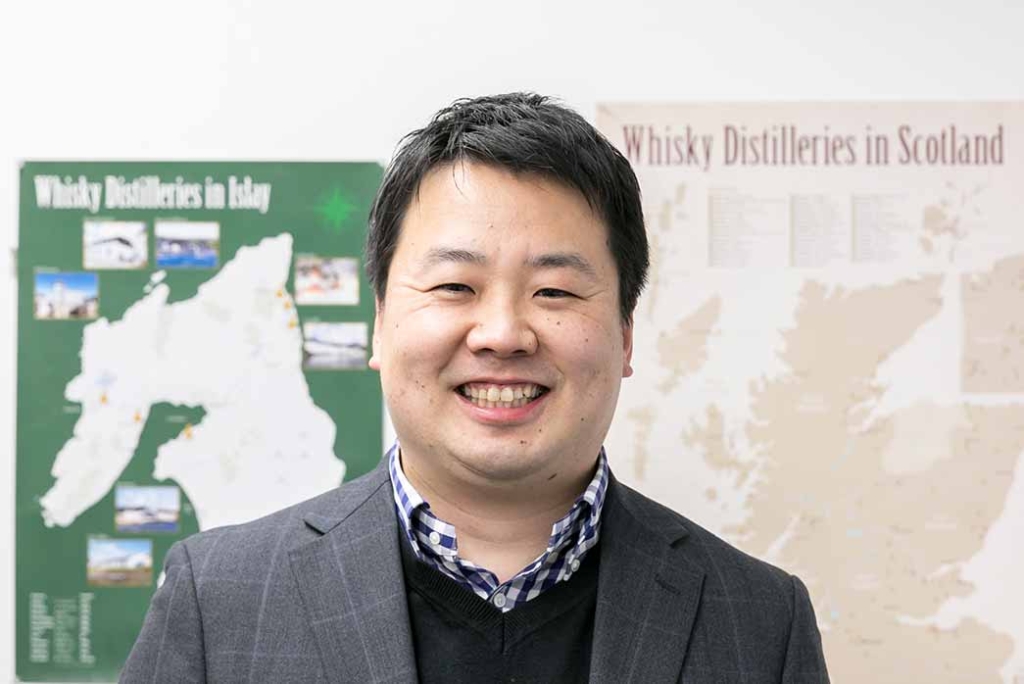
Taiki Nakayama
Publisher and Editor-in-Chief of SHOCHU NEXT. CEO of Nanzan Bussan Co., Ltd. Certified sake sommelier and shochu sommelier.
After graduating from Waseda University, he worked in overseas sales at foreign-affiliated trading companies and IHI Corporation. Feeling a mission to promote shochu globally, he founded Nanzan Bussan Co., Ltd. in March 2018. He currently exports Japanese sake and shochu to around 15 countries, with a focus on shochu.
Notes
(*1) “Massan”: A morning drama series by NHK depicting the life of Masataka Taketsuru, the founder of Nikka Whisky, and his wife Rita.
(*2) Kura Master: A Japanese sake competition held in France since 2017, aimed primarily at French judges. Top sommeliers, bartenders, and caved wine specialists from France and other European countries evaluate the entries. From 2021, a category for authentic shochu and awamori was added.
(*3) Long-Term Aged: For authentic shochu, the label “Long-Term Aged” can only be used if 50% or more of the blended total volume has been aged for at least three years.
(*4) Light Regulation: A regulation under Japanese liquor tax law (“Liquor Tax Law and Related Regulations Interpretation”) regarding coloring of shochu. The absorbance at 430 nm and 480 nm must each be 0.080 or below when measured with a photometer. For comparison, typical whisky has an absorbance of 0.4–0.8. This ensures shochu is visually distinguishable from whisky and brandy.