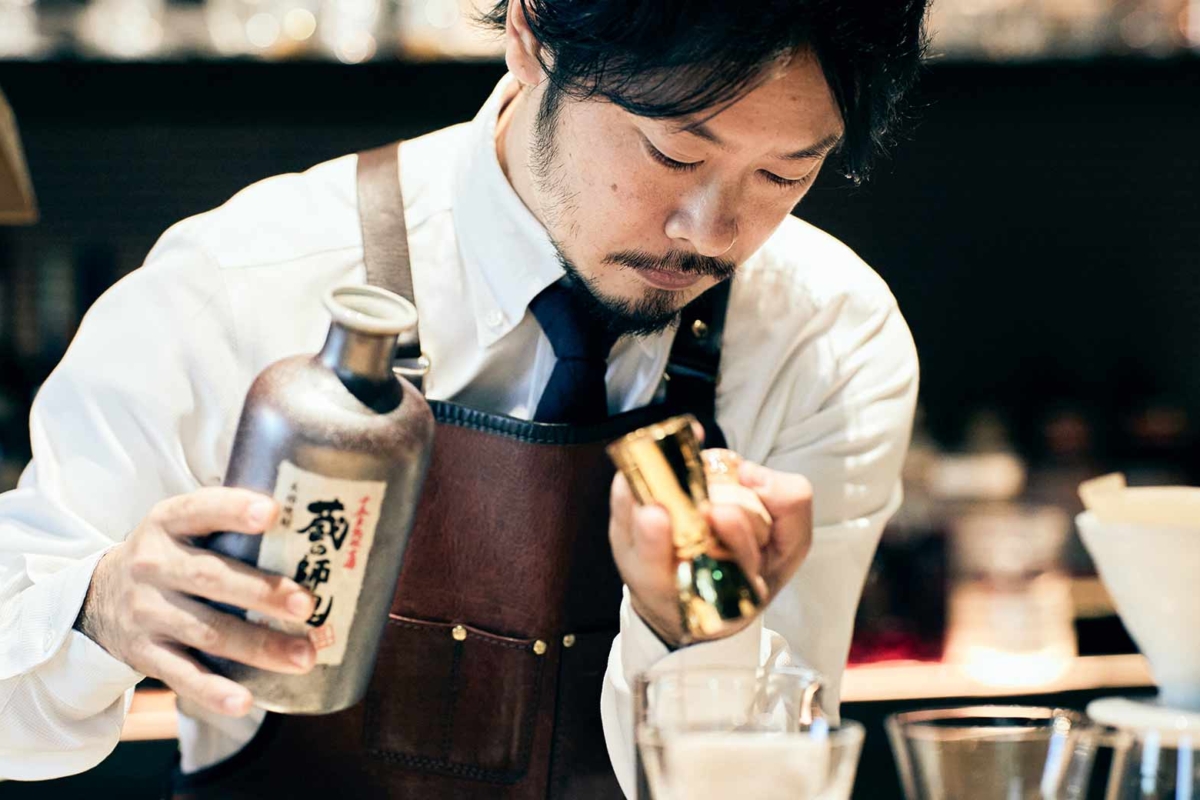


When you think of cocktails made with shochu, what comes to mind? Chu‑hi, tea mixes, maybe a water mix with pickled plum…? If those few options made with continuously distilled shochu (so‑called “Ko‑rui” shochu) are all you can think of, you might fall behind in the evolving world of drinks. That’s exactly what Shuuzo Nagumo, a mixologist running five bars in Tokyo, is challenging.
Nagumo is known for pioneering “mixology” in Japan, creating cocktails that combine fresh ingredients like fruits and herbs with spirits, long before the term was widely recognized here. In recent years, he has focused on honkaku shochu and awamori. At one of his bars, MIXOLOGY SPIRITS BANG(K) inside Ginza’s PLUSTOKYO, the shelves are lined exclusively with Japanese spirits—including shochu, awamori, gin, and whiskey. The variety, visual appeal, and taste of shochu-based cocktails there are simply astonishing.
For this project, SHOCHU NEXT asked Nagumo to develop cocktails specifically using aged shochu. The goal: to unlock the potential of shochu with 15 unique aged expressions collected from different distilleries. Rising to this bold challenge, Nagumo created a world of cocktails more exciting than anyone could imagine. These 15 aged shochu cocktails will be introduced in detail on this site and on our YouTube channel in the near future.
Where does aged shochu stand among the world’s spirits, and what potential does a top bartender see in it? To kick off this series, we conducted an in‑depth interview with Nagumo himself.
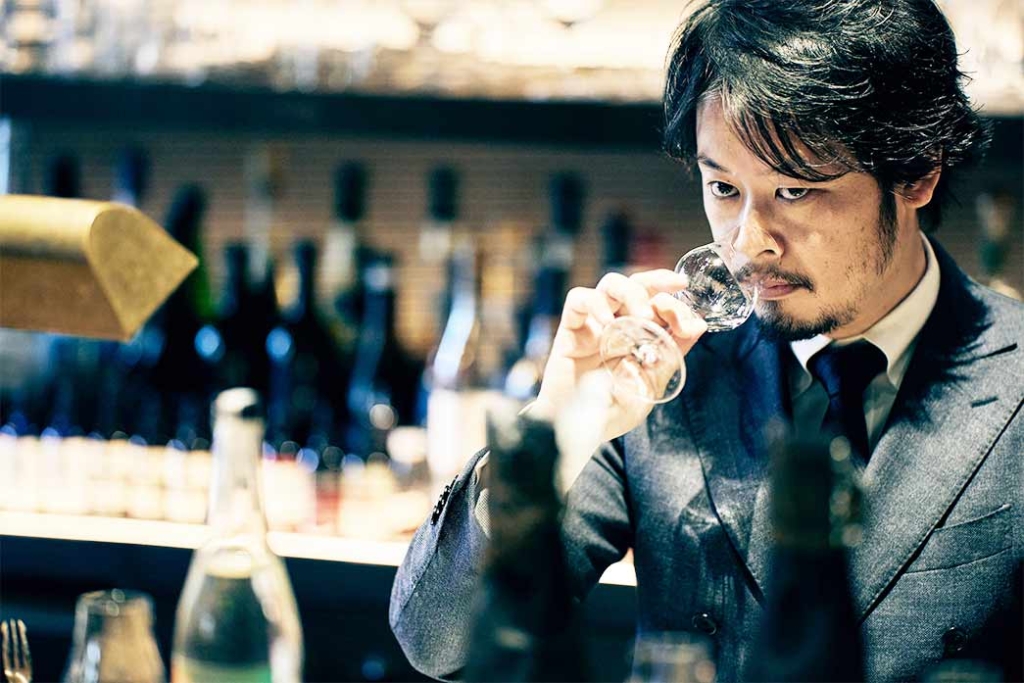
At Memento Mori in Toranomon, one of the bars run by Nagumo. On the SHOCHU NEXT YouTube channel, you can also watch footage of aged shochu tastings.
Conveying craft spirits—shochu—as a part of Japanese culture.
―Mr. Nagumo, you actively work with shochu in your bars, including “MIXOLOGY SPIRITS BANG(K),” and you even produce collaborations like “MIX UP SHOCHU” with shochu distilleries in Miyazaki. When did you first encounter shochu?
Of course, I had tried various shochu before—both kōrui and otsurui types—but the real professional turning point came in 2017. At the beginning of that year, I opened a bar called “Mixology Salon” in the new Ginza complex GINZA SIX, where we served cocktails using tea leaves. Since the bar’s concept was centered around “Japanese” themes, I wanted to deepen my knowledge of sake and create cocktails using it.
So I asked Imadeya, the sake shop in the same complex, to teach me about sake. They said, “Of course, we’ll teach you anything—but in return, we want your help with honkaku shochu.” (laughs) That led to my first shochu cocktail event organized by Imadeya, where I created cocktails for the guests.
The cocktails themselves weren’t particularly groundbreaking from a bartender’s perspective, but the response was amazing. That’s when I realized that shochu cocktails hadn’t really been developed much until then. From there, I decided to study more and explore ways to use honkaku shochu and awamori in cocktails.
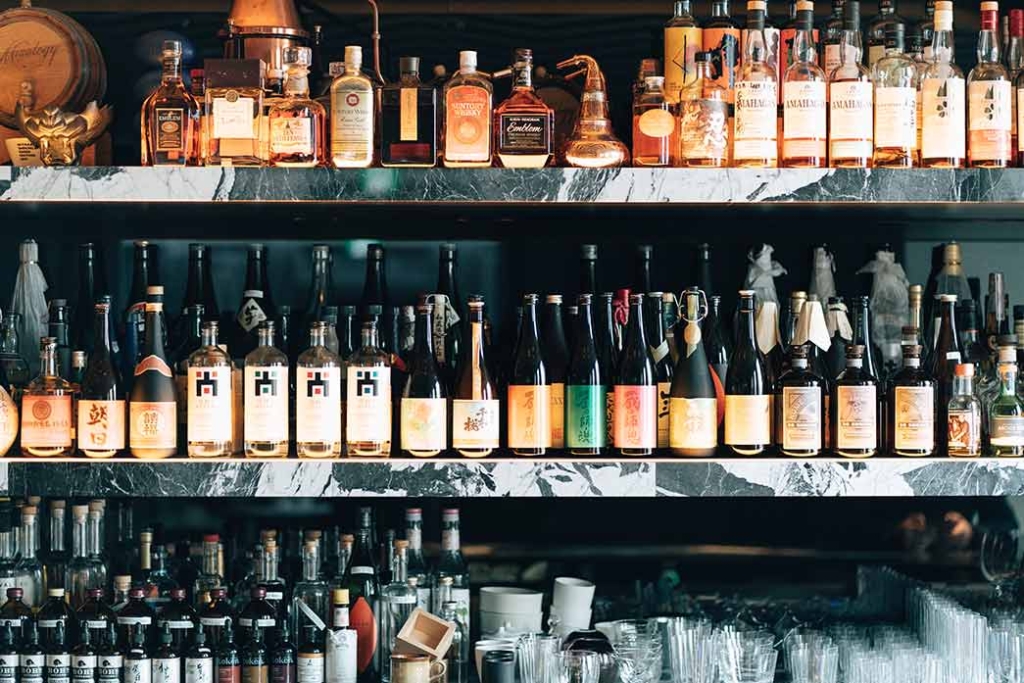
The back bar at Ginza’s MIXOLOGY SPIRITS BANG(K), lined with an array of shochu bottles.
―Since you have such deep knowledge of honkaku shochu and awamori, I thought you’d been involved much longer! Still, MIXOLOGY SPIRITS BANG(K), a bar specializing in domestic spirits like honkaku shochu, awamori, whiskey, and gin, opened only at the end of 2018. You must have studied quite intensively since then.
Yes, I feel I’ve been very fortunate in my encounters with shochu. MIXOLOGY SPIRITS BANG(K) is located inside Ginza’s PLUSTOKYO. I was asked to open a bar in a place that represents Tokyo’s cutting-edge culture, and I thought it should be a bar that could also showcase Japanese alcohol culture. That’s how I created a bar focused on Japanese distilled spirits. From there, I kept learning more, and in 2019, I started hosting my own event called CSC (Craft Japanese Spirits & Cocktail Convent), dedicated to Japanese craft spirits—mainly honkaku shochu from various regions.
The event followed a style often seen at overseas mixology events, with seminars and tastings held simultaneously. For the first edition, we invited ten breweries including Nakamuura Shuzo (Nakamura Shuzojo), Nishishuzo (Hozan), Toyonaga Shuzo (Toyonagagura), and Fujii Shuzo (Taimei). After the event, I visited all the participating breweries to thank them and hear their stories firsthand. Through this, I was able to expand my opportunities, and including multiple visits, I think I’ve now visited over 40 breweries.
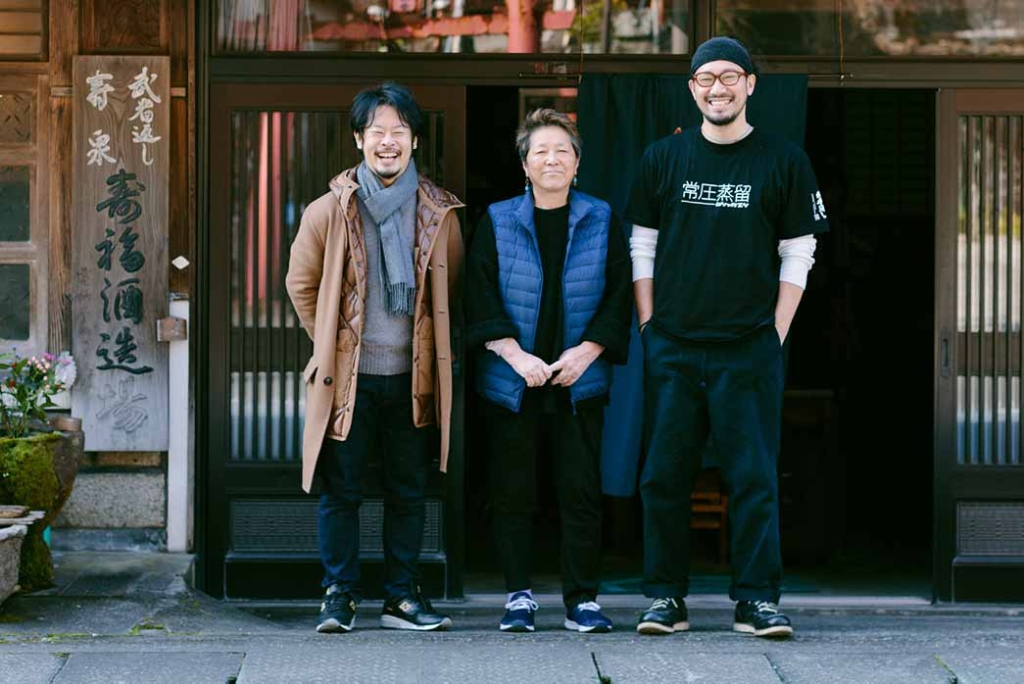
At SHOCHU NEXT, we also set out on a trip with Mr. Nagumo to visit six breweries in southern Kyushu. Footage from the journey will be released gradually. The photo was taken at Jufuku Shuzojo in Kumamoto Prefecture.
Shochu that’s easy to work with as a cocktail base vs. shochu that’s more challenging.
―Actually going to the distilleries and engaging directly with the makers has built a lot of trust from the breweries. From your perspective as a bartender who creates countless cocktails, how would you describe honkaku shochu?
After studying cocktails made with honkaku shochu and awamori, I’ve realized that not all shochu are suited for cocktails. Also, flavors that seem strong on their own can sometimes feel surprisingly weak when used as a cocktail base.
Take imo shochu, for example. People often describe it as “pungent” or “distinctively funky,” but when you consider it as a cocktail base, it’s not really like that. In fact, imo shochu is the most delicate of all shochu—its taste and aroma are gentle and nuanced. On the other hand, shochu made from rice, barley, or sesame tends to have more “strength” as a spirit.
If I were to make an analogy, imo shochu is like a watercolor painting, while rice, barley, and sesame shochu—especially aged ones—are like oil paintings. Most Western-style cocktails, including liqueur-based ones, are very “oil-paint-like”: rich, strong, and full-bodied, where each pigment retains its character even when mixed. Shochu that can hold its own in such cocktails is the type with that oil-paint-like strength.
If you mix watercolor paints into an oil palette, they just get overpowered, right? It’s the same with imo shochu. To bring out its character in a cocktail, you need a different kind of care compared to traditional cocktail-making.
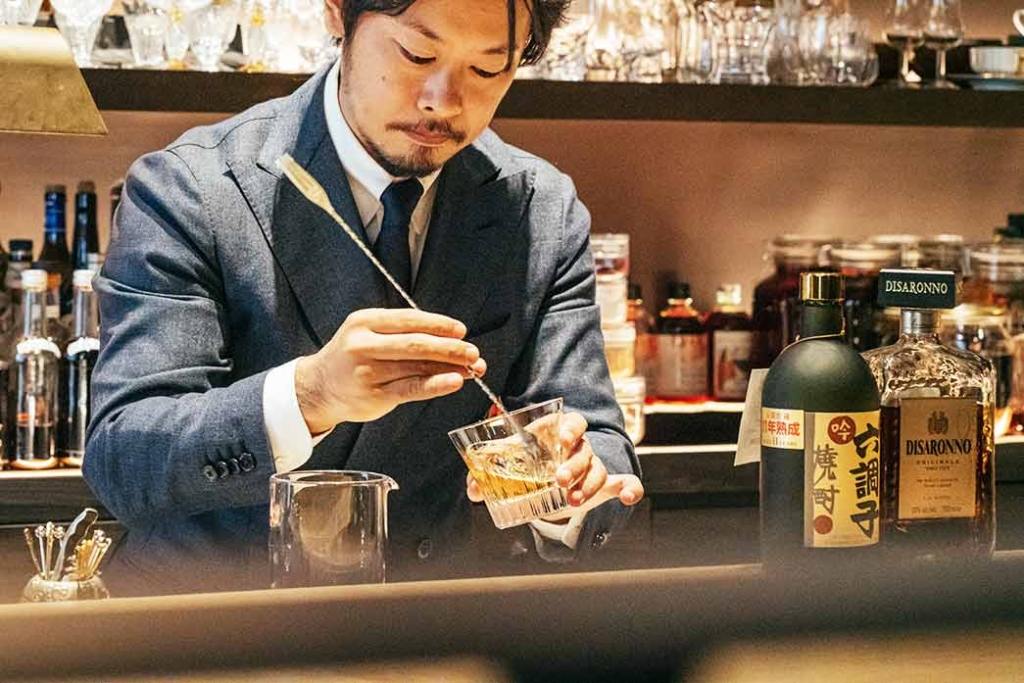
Nagumo’s careful yet swift technique when making cocktails offers plenty of insights—not just for professionals, but for general viewers as well.
―For “SHOCHU NEXT,” I created cocktails using 15 different aged shochu from various regions—made from sweet potato, barley, rice, brown sugar, and sesame. There was a lot of effort involved, including repeated trial mixes and on-site adjustments, but how did you find the actual process of making them?
Whether it’s gin or whiskey, there are countless brands around the world, right? Have you ever thought about making cocktails for each one individually? That’s exactly what the request from “SHOCHU NEXT” was! (laughs) Instead of treating “honkaku shochu” as one big category, I had to tailor each cocktail to the specific flavor of each aged shochu, so to be honest, it was quite challenging.
That said, it was also incredibly enlightening and fun. Since I was doing it, I wanted to create something that could give hints to professionals as well, and I think I was able to achieve that. I learned a lot—flavors that only aged shochu can express, and the way different raw materials affect taste.
―Just between us, which aged shochu was the most challenging to work with?
Hmm, each had its own difficulties (laughs), but I’d say aged awamori requires a bit more research. Like sweet potato shochu, aged awamori surprisingly has a gentle flavor structure. If you make it too easy to drink, it loses what makes an awamori cocktail unique. But if you leave too much of its character intact, people might as well just drink it straight (laughs). Personally, I’d define aged awamori as a spirit with the softness and sweetness reminiscent of vanilla.
For this project, we used relatively high-class aged awamori like Yamakawa Shuzo’s “Sango-sho 10 Years” and Miyazato Shuzo’s “Harusame 5 Years.” Spirits of that caliber might be easier to work with—they preserve the essence of awamori while giving the cocktail a rich taste.

Reconsidering Light Exposure to Unlock the Potential of Aged Shochu!
―At SHOCHU NEXT, we are currently focusing particularly on aged shochu, delving deeper into the world of honkaku shochu and awamori. All the shochu used in this project were aged, but what are your thoughts on the current state of shochu maturation?
For tank-aged shochu, the impact of the tank itself is minimal. The changes occur purely within the spirit, resulting in a smoother integration of the components with water. While maturation rarely produces entirely new compounds, I’ve noticed that shochu aged four to five years can be particularly good.
When it comes to the oldest storage method—earthenware jars—a longer period, around 15–16 years, allows minerals from the jar to subtly enhance the flavor, improving the overall taste.
Then there’s barrel aging. In this project, we had some very delicious and interesting barrel-aged shochu. However, with barrel aging, the color of the shochu naturally changes, which brings us to the issue of light exposure regulations in honkaku shochu. Simply put, under the Liquor Tax Law, honkaku shochu is not allowed to have color, to avoid confusion with whiskey and similar spirits. Personally, I think this regulation should absolutely be abolished.
Because of this rule, distilleries have devised various strategies. Some filter the shochu to remove the color when commercializing it, while others preserve the color but add small amounts of additives to sell it as a “liqueur.” Of course, each approach has its reasoning, and I wouldn’t claim one is definitively correct. But in my view, removing the color inevitably diminishes both aroma and flavor.
If the light exposure regulation were lifted, shochu and awamori could truly realize their potential. If these spirits are to compete with other global distilled spirits, this restriction must go. I hope this becomes a topic of open discussion, including with the distillers themselves.
―Do you have any thoughts or advice on what to look for in shochu maturation?
While tank and jar aging—the traditional methods—are already well-mastered, I still see plenty of room for growth in barrel aging. I also believe there’s much more potential in blending. Currently, the norm is usually just a few varieties, often from the same distillery. But if we look at global spirits, it’s not unusual to blend dozens of different base spirits—take Rémy Martin Louis XIII, for example, which blends 1,200 individual eaux-de-vie.
There’s no reason we couldn’t experiment similarly with shochu—blending dozens of varieties, even from different distilleries. There’s a lot of possibilities waiting to be explored.

Sharing Japanese spirits with the world is the mission of Japanese bartenders.
―We’re curious how someone with your global perspective, Mr. Nagumo, evaluates authentic shochu and awamori. Do you have any message for the distillers themselves?
Nagumo: Expanding domestic sales has always been important, of course, but now we’ve reached a point where we really have to look toward the much larger global market. That’s why I hope the people making Japanese spirits—authentic shochu and awamori—take the opportunity to see how spirits are made around the world: Cognac, Eau-de-Vie, Bourbon, Single Malt, Gin… Even those spirits are still evolving. Technology and trends keep advancing, so it’s crucial to stay alert and see which direction things are heading. Ideally, distilleries could also exchange knowledge with each other—sharing techniques and information among makers of spirits. By stepping outside the world of shochu and looking at it from a broader, neutral perspective, I’m sure new discoveries and insights will emerge.
―Finally, one more question. We hope that more bartenders will be inspired to try working with shochu after discovering your aged shochu cocktails. Do you have any advice for fellow professionals who want to deepen their understanding of shochu?
Nagumo: When I first seriously encountered authentic shochu, I thought to myself: “I’m a Japanese mixologist, so it would be shameful not to know my own country’s spirits.” I could speak at length about gin, whiskey, and cognac, but if I couldn’t introduce my own country’s distilled spirits, that wouldn’t make sense. The world of shochu and the production process are constantly evolving. If someone still has a negative impression of shochu from the past, that’s such a waste. The current world of authentic shochu and awamori is truly fascinating. Bartenders can become ambassadors for the distilled spirits produced in their own country. I would be very happy if people could see it as our mission.
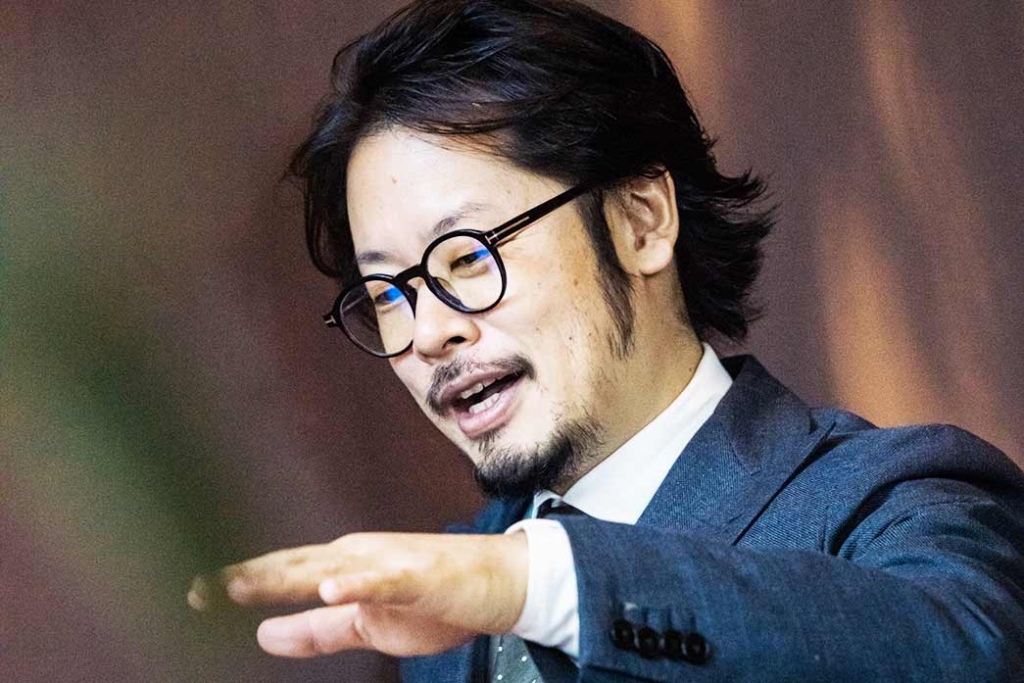
Shuzo Nagumo
Born 1980. A mixologist who drives the bar scene with highly creative cocktails. In addition to managing bars such as memento mori and Mixology Akasaka, he is active across a wide range of fields including promotional planning and consulting. He is also the author or co-author of numerous books, including The Mixology: Methods and Techniques for Cocktail Creation (Shibata Shoten).